Oh Happy Day

In honor of Easter coming up this Sunday, I decided to look into some of the Easter traditions in Italy for my last Italian cuisine and culture blog as this semester comes to an end.
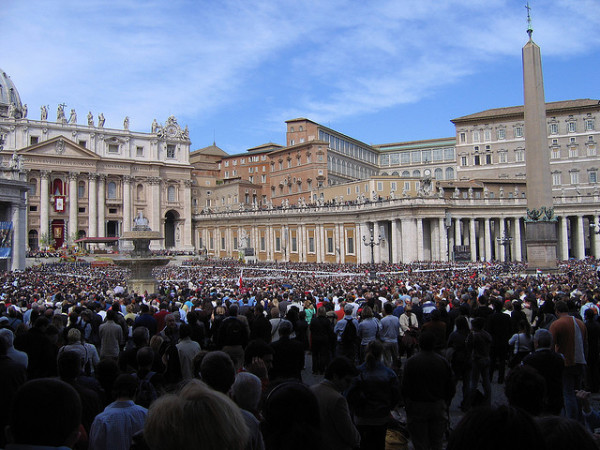
Easter Mass in St. Peter’s Square

Easter Sunday is a big deal in Italy. Holy Week begins the Sunday before, on Palm Sunday, and there are religious services and processions throughout the week leading up to Easter. I found this part to be interesting because as someone who’s a Christian and has grown up going to a non-denominational church her whole life, I’ve learned about Palm Sunday, Good Friday, and Easter- but have never participated in any services or processions during the week between Palm Sunday and Easter. Some of these processions in Italy consist of the “Stations of the Cross” in Rome which is led by the pope; one in the Sicilian town of Enna, with thousands of white-hooded friars carrying statues of Jesus and the Virgin Mary; and the oldest religious procession in Italy in the Abruzzo town of Chieti, also with thousands of hooded brothers and followed by a marching orchestra and choir performing the “Miserere.”
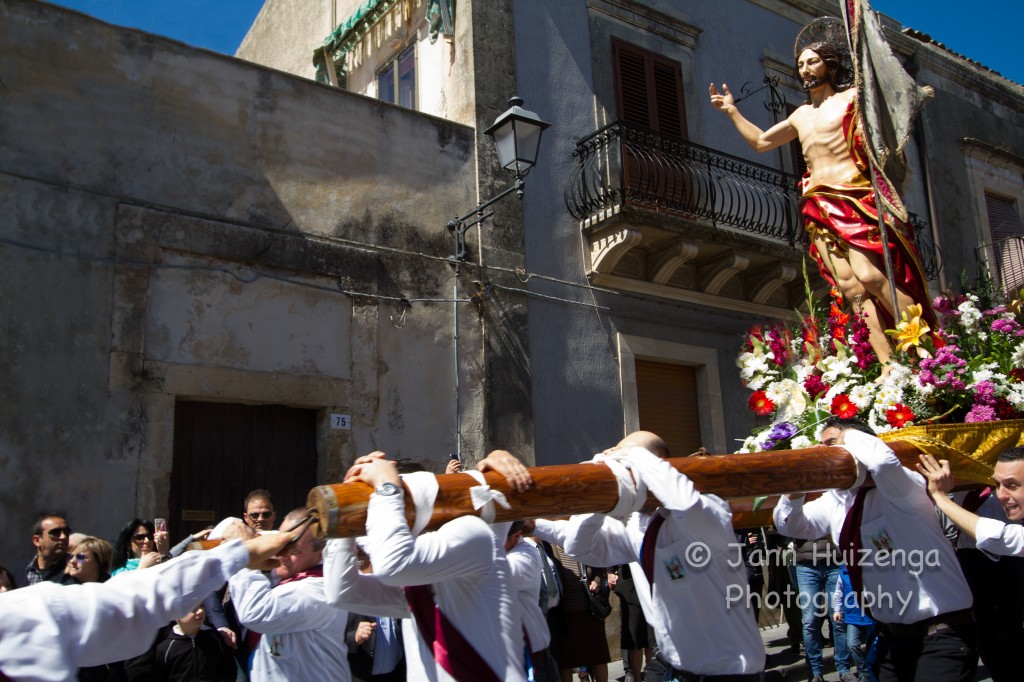
Easter Procession in Sicily

Easter – which is Pasqua in Italian– is marked by services in churches throughout the country, as well as a big meal enjoyed at home with family. When researching this part of the holiday in Italy, I was able to relate it back to my family. We too go to an Easter Sunday service at church and spend time with family (either extended or just immediate- depends on the year). However, it does differ some- while reading I learned that Easter in Italy consists of a big meal that consists of traditional dishes like artichokes, roast lamb, and sweet holiday bread called “Colomba” which means “dove” in Italian. In my family, we’ve never really had a “big” meal for Easter. Growing up it’s always been spent with my dad’s family, until recent years where it’s become harder for us to gather. When we would all get together we would mostly have a smorgasbord of different things- from my aunts sausage rolls to chicken nuggets and TONS of pies/ desserts, so it was more like tons of little appetizer-ish things that we snacked on throughout the day as the adults would spend time talking in the living room, and all the cousins would be running around outside finding Easter eggs and throwing a football.
I wish y’all a blessed Easter spent with those you love!
https://www.youtube.com/watch?v=5BTQKkqlNTg

Although there are some differences in how Easter is celebrated from culture to culture, and family to family the celebration itself boils down to celebrating the resurrection of Jesus Christ who washed away our sins.
Partyin’ on a Tuesday

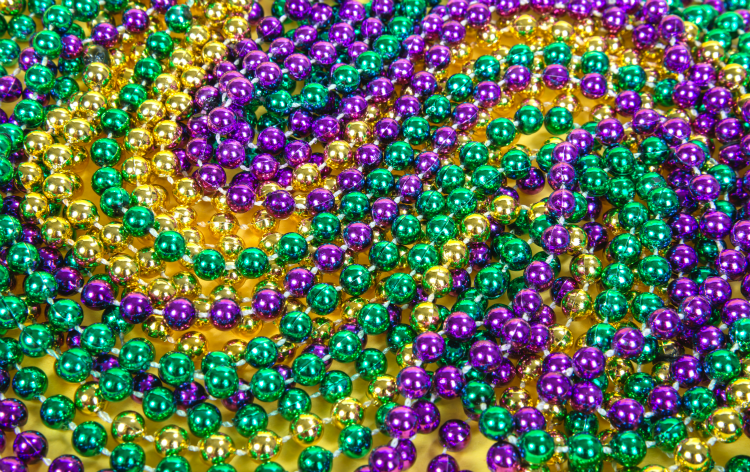
As some of you may know, this Tuesday, March 5th, is Mardi Gras (or you could be like me and knew it was sometime soon but didn’t realize just how soon). In the United States, we associate Mardi Gras with New Orleans, purple, green, and gold colors, beads, and a massive parade full of unique traditions. For a deeper understanding of what exactly Mardi Gras is I turned to google to learn some more. Mardi Gras, or “Fat Tuesday,” refers to events of the Carnival celebration, beginning on or after the Christian feasts of the Epiphany (Three Kings Day) and culminating on the day before Ash Wednesday (known as Shrove Tuesday). I also learned that Mardi Gras is also celebrated in different places around the world.

So, I was curious what Mardi Gras might look like in Italy, and what I found out was quite interesting. Mardi Gras, or Carnevale in Italy has roots in pagan festivals and traditions and, as is often the case with traditional festivals, it was adapted to fit into the Catholic rituals. Although Carnevale is actually one date, in Venice and elsewhere in Italy the celebrations and parties may begin a couple weeks before. Italy has many Carnevale celebrations , but Venice, Viareggio, and Cento hold the biggest and most elaborate festivals.

Carnevale in Venice

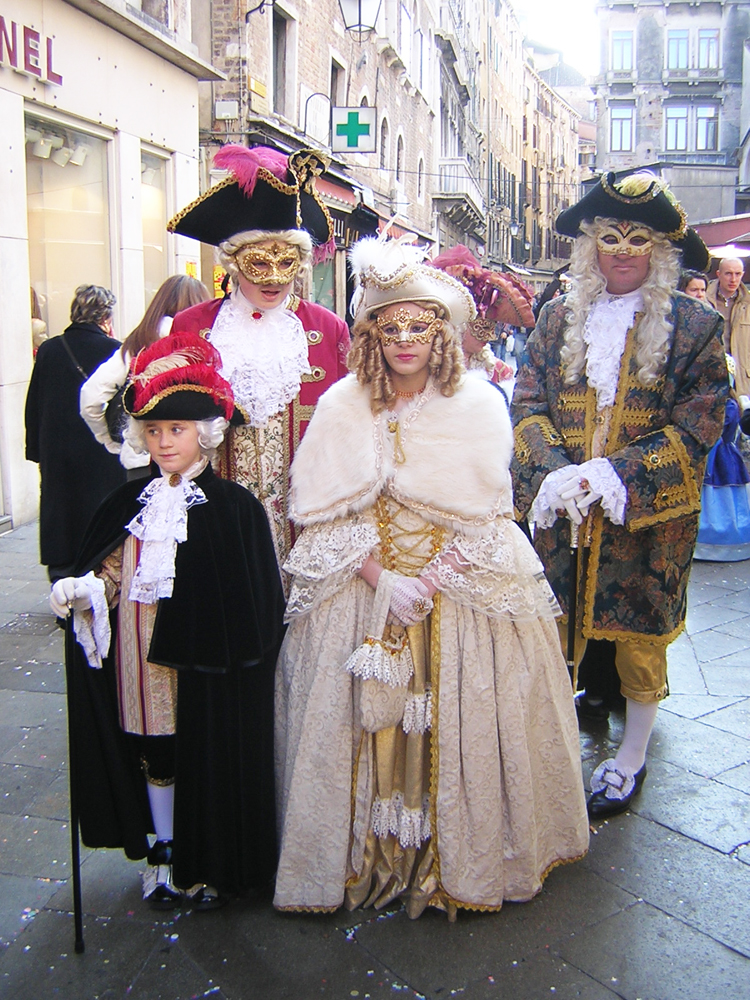
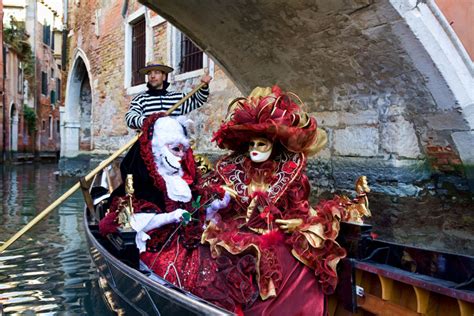
Masks, maschere, are an important part of the Carnevale festival and are sold year-round at many shops in Venice, ranging from cheap versions to elaborate and expensive ones. People also wear elaborate costumes for the festival and there are costume or masquerade balls, both private and public. Although the spirit and the tradition of these festivities are very different, Italians celebrate Carnevale just as Americans celebrate Halloween: they dress up.  Everybody dresses up and children love it. There is no “trick or treat” and horror theme, however. The focus is on having fun dressed as something or somebody else. Elementary schools and kindergartens usually cease the typical daily lessons and allow the children to enjoy a day-long party on school premises.

Example of the costumes worn during Carnevale

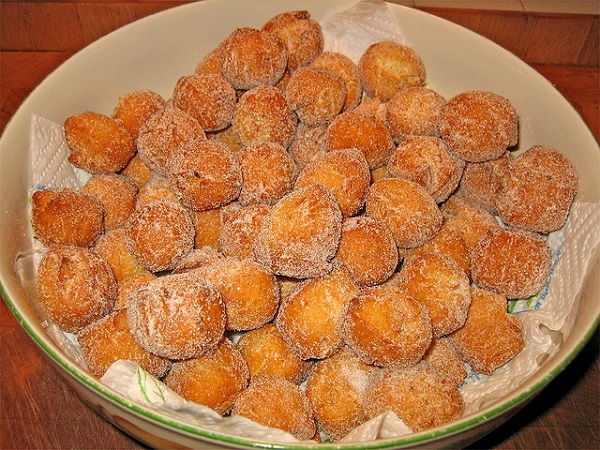
I was also curious about what some of the common cuisine is during this celebration. The typical sweets of Carnevale are the castagnole or the frappe, similar to doughnuts and pastries, both are deep fried and very tasty.

The castagnole are a fried pastry typical of the Carnival in Italy

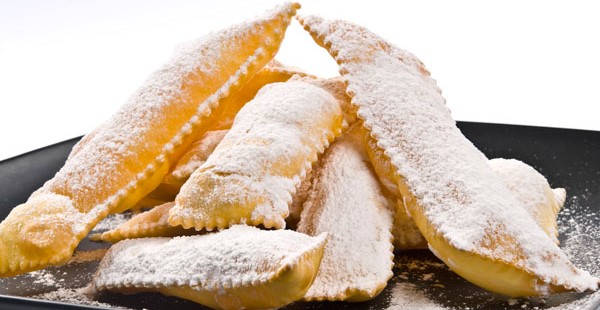
Another common food eaten during Carnevale is Chiacchiere, or Mardi Gras fritters. They are a crispy treat eaten throughout Italy during this time of celebration.

Chiacchiere

Overall, I found it to be very interesting to look at how another culture celebrates a holiday most people in the US associate with the uniqueness that occurs in New Orleans. I would definitely love to go see this fun-looking and unique celebration first hand one day!