Oh Happy Day

In honor of Easter coming up this Sunday, I decided to look into some of the Easter traditions in Italy for my last Italian cuisine and culture blog as this semester comes to an end.
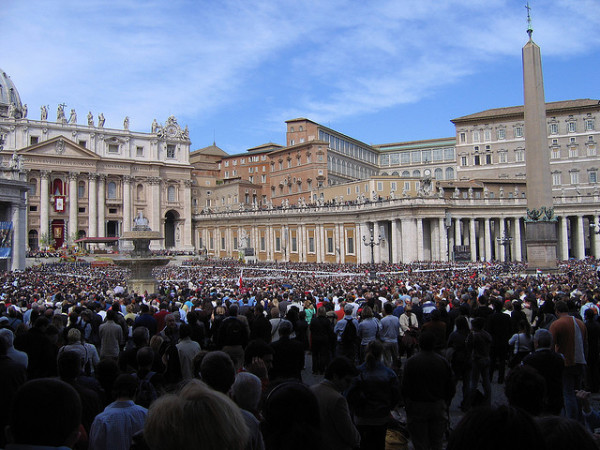
Easter Mass in St. Peter’s Square

Easter Sunday is a big deal in Italy. Holy Week begins the Sunday before, on Palm Sunday, and there are religious services and processions throughout the week leading up to Easter. I found this part to be interesting because as someone who’s a Christian and has grown up going to a non-denominational church her whole life, I’ve learned about Palm Sunday, Good Friday, and Easter- but have never participated in any services or processions during the week between Palm Sunday and Easter. Some of these processions in Italy consist of the “Stations of the Cross” in Rome which is led by the pope; one in the Sicilian town of Enna, with thousands of white-hooded friars carrying statues of Jesus and the Virgin Mary; and the oldest religious procession in Italy in the Abruzzo town of Chieti, also with thousands of hooded brothers and followed by a marching orchestra and choir performing the “Miserere.”
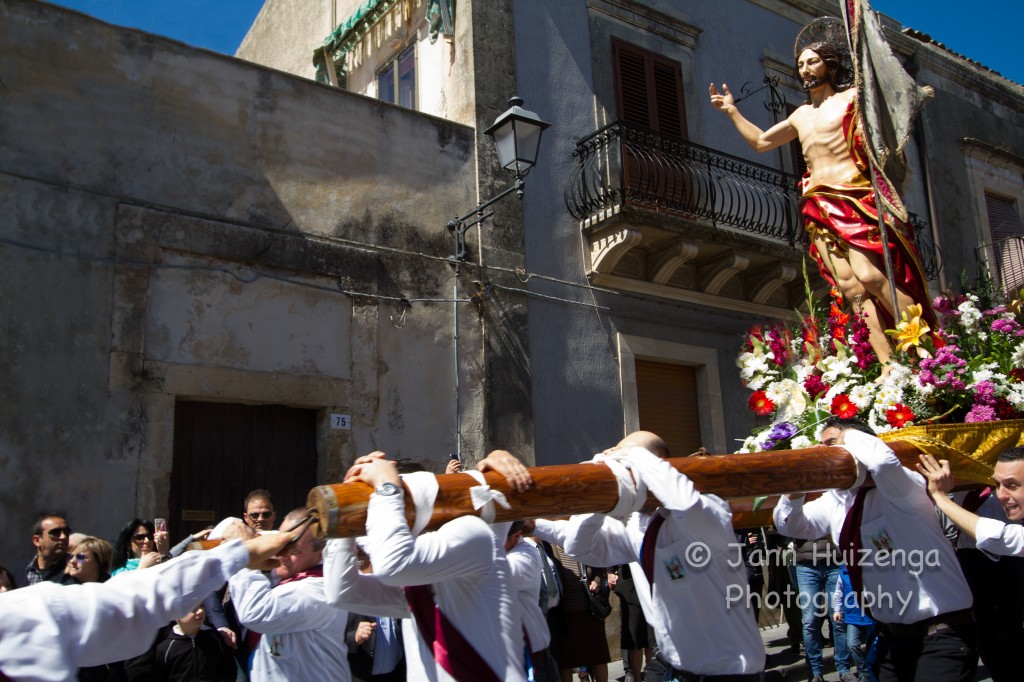
Easter Procession in Sicily

Easter – which is Pasqua in Italian– is marked by services in churches throughout the country, as well as a big meal enjoyed at home with family. When researching this part of the holiday in Italy, I was able to relate it back to my family. We too go to an Easter Sunday service at church and spend time with family (either extended or just immediate- depends on the year). However, it does differ some- while reading I learned that Easter in Italy consists of a big meal that consists of traditional dishes like artichokes, roast lamb, and sweet holiday bread called “Colomba” which means “dove” in Italian. In my family, we’ve never really had a “big” meal for Easter. Growing up it’s always been spent with my dad’s family, until recent years where it’s become harder for us to gather. When we would all get together we would mostly have a smorgasbord of different things- from my aunts sausage rolls to chicken nuggets and TONS of pies/ desserts, so it was more like tons of little appetizer-ish things that we snacked on throughout the day as the adults would spend time talking in the living room, and all the cousins would be running around outside finding Easter eggs and throwing a football.

I wish y’all a blessed Easter spent with those you love!
https://www.youtube.com/watch?v=5BTQKkqlNTg

Although there are some differences in how Easter is celebrated from culture to culture, and family to family the celebration itself boils down to celebrating the resurrection of Jesus Christ who washed away our sins.
Buzz about My Brioche Baking Experience

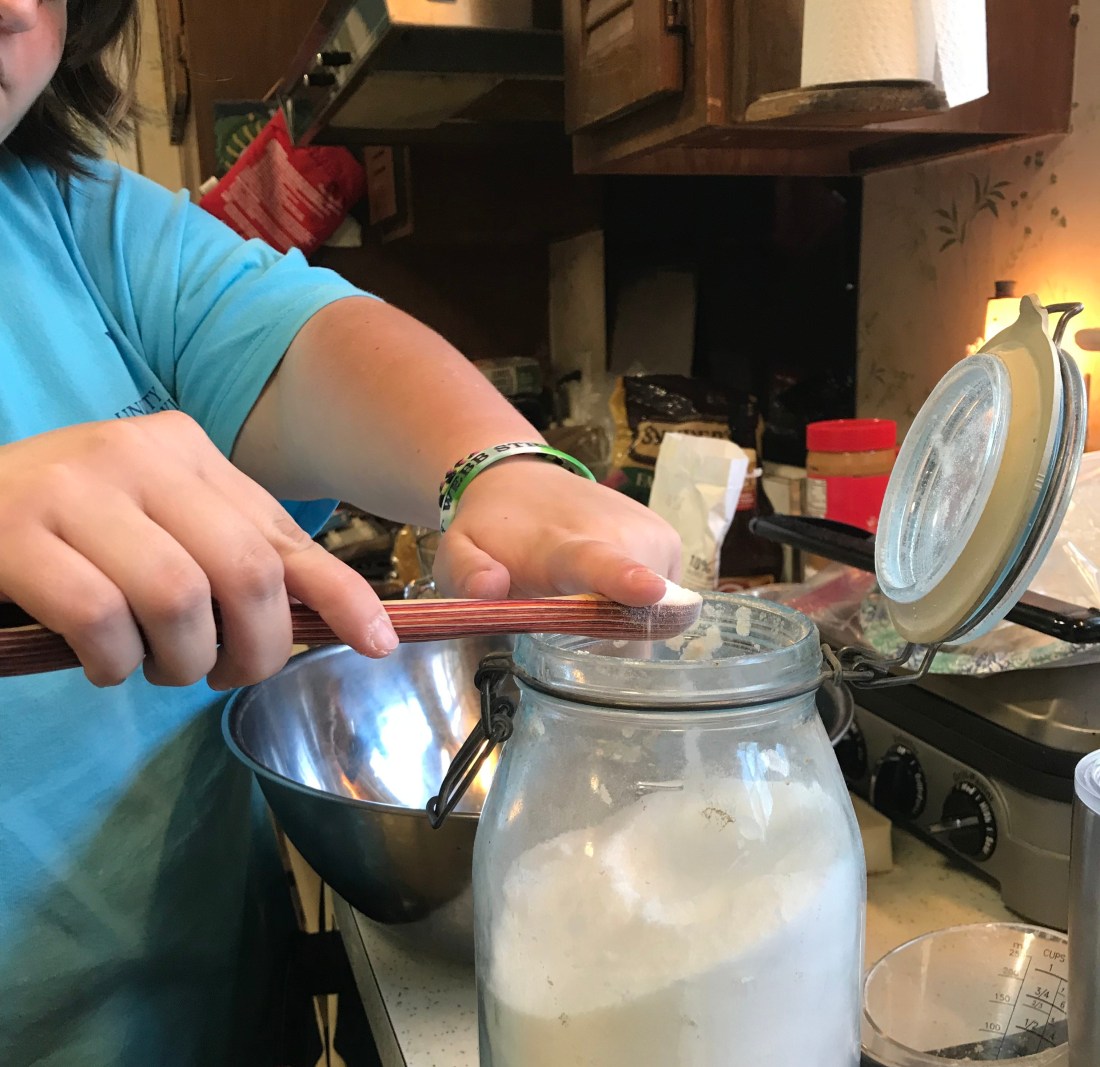
This past weekend my mom and I took on the task of making brioches to relieve some of the stress of lesson planning… and let me just say kneading dough is a great stress reliever! I got the recipe from the cookbook “Science in the Kitchen and the Art of Eating Well” by Pellegrino Artusi, and it was recipe number 575. This recipe called for 300 grams (about 10-1/2 ounces) of Hungarian flour, 150 grams (about 5-1/4 ounces) of butter, 30 grams (about 1 ounce) of brewers yeast, 20 grams (about 2/3 of an ounce) of sugar, 5 grams (about 1/5 of an ounce) of salt, and 6 eggs. It also calls for confectioners sugar later on in the recipe, but it was not in the list of ingredients so sadly that part was left out of my baking experience.

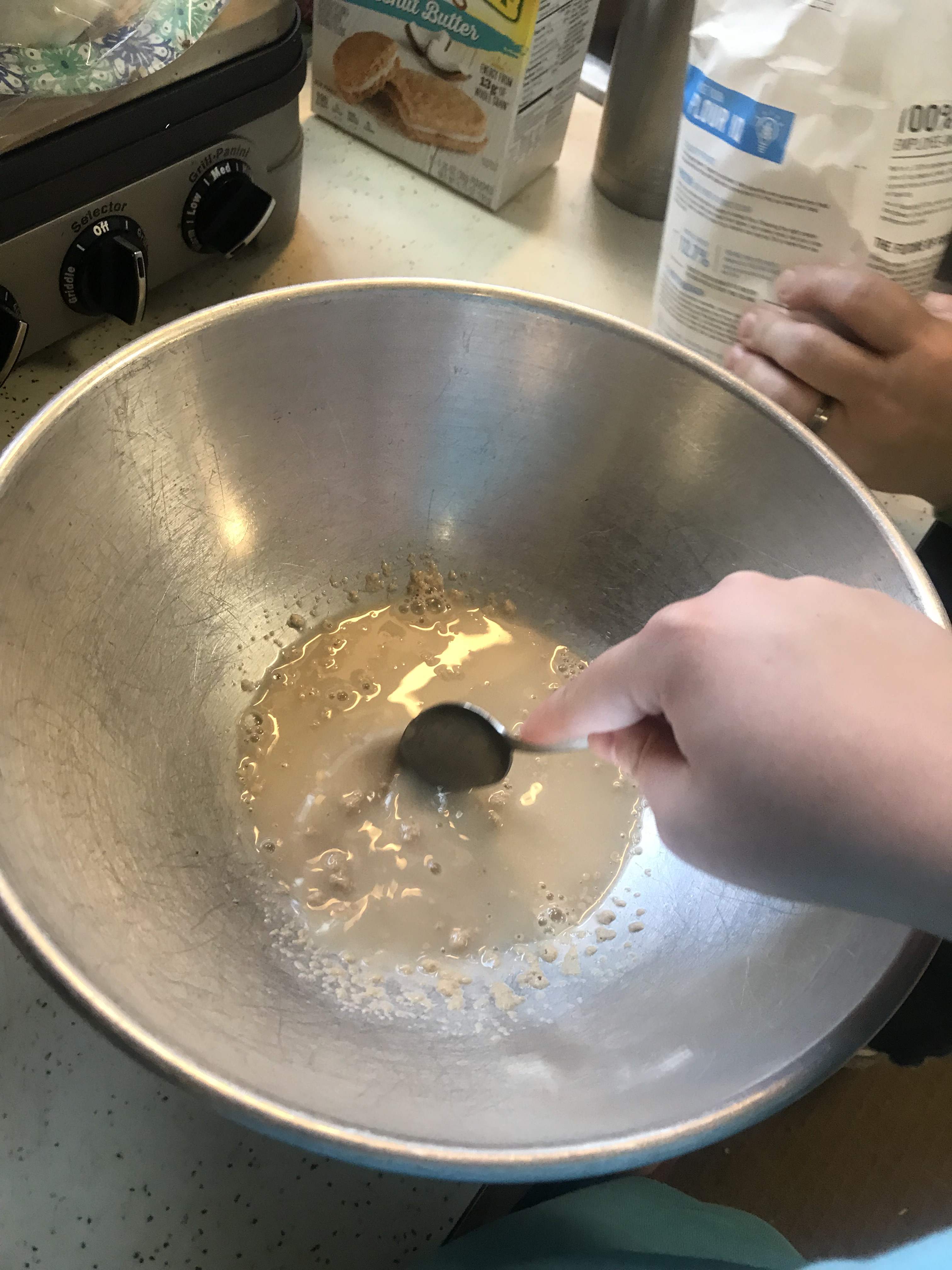
First you mix together the yeast in warm water and mix in a quarter of the flour
Make sure to mix until well combined
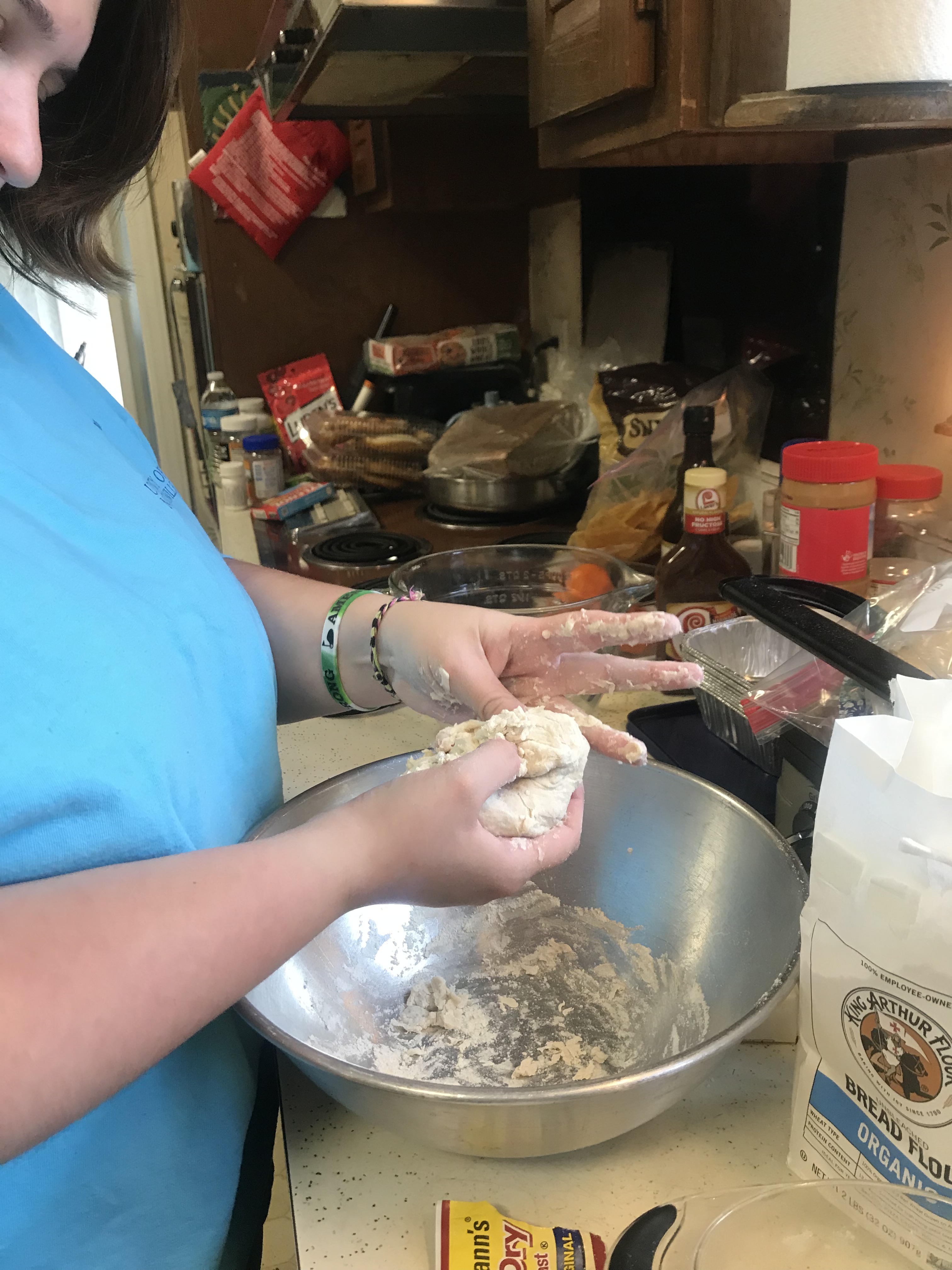
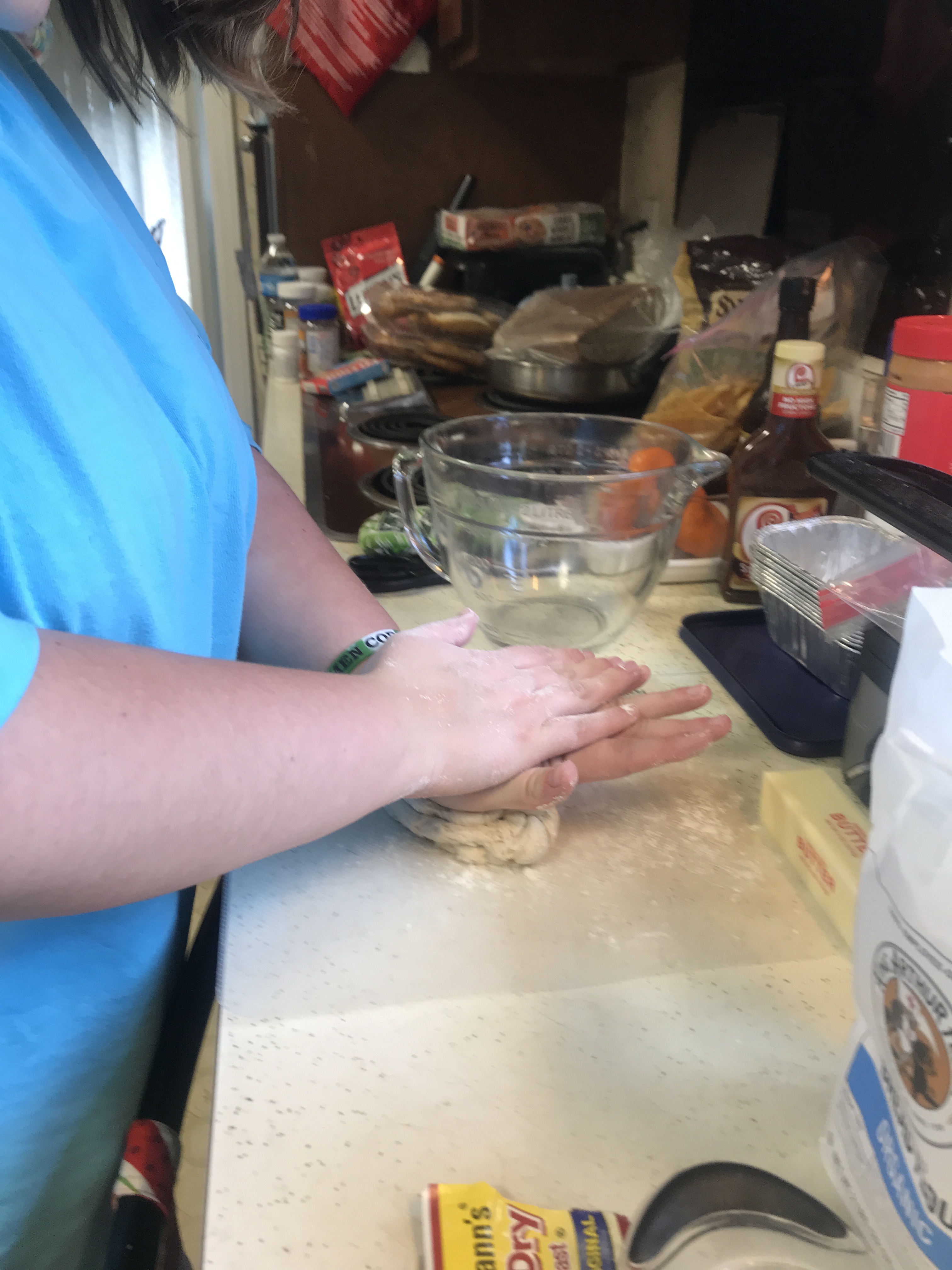
Once it’s mixed together, you then knead it until it’s the “right consistency”
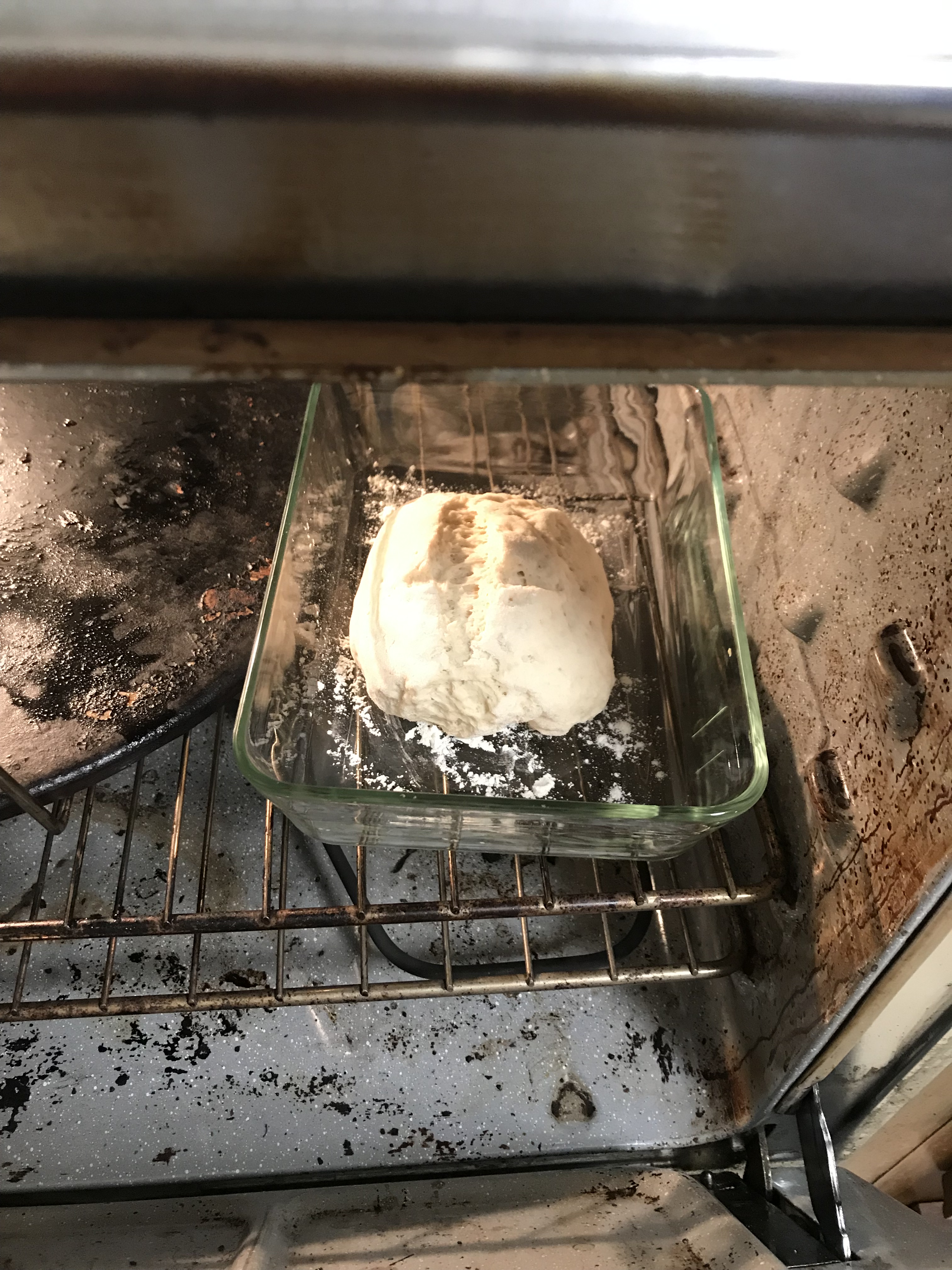
You then cut a cross in the top and place it in a small baking pan with a “film of flour” and set it aside to rise in a warm place (until it’s nearly double in size)

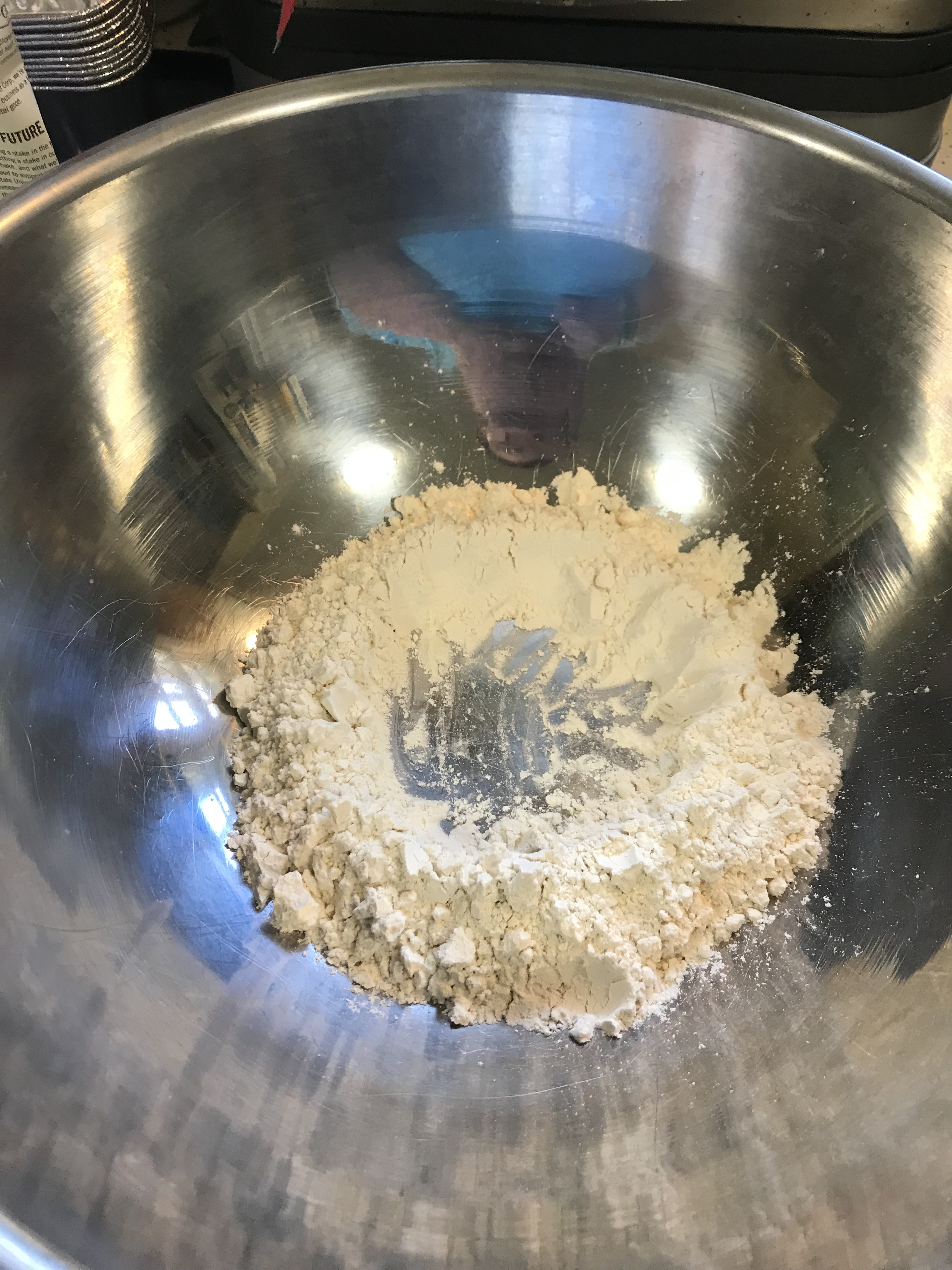
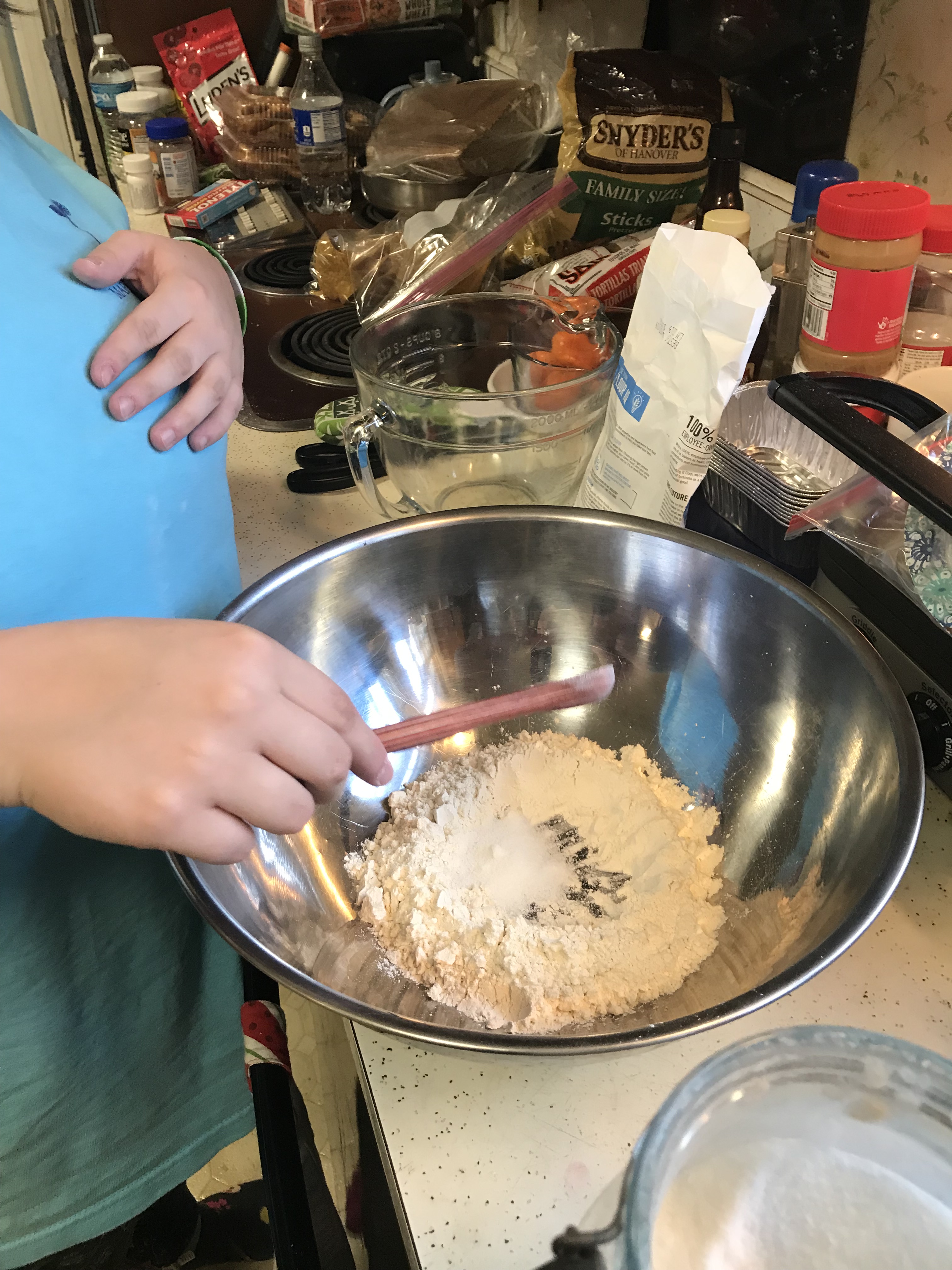
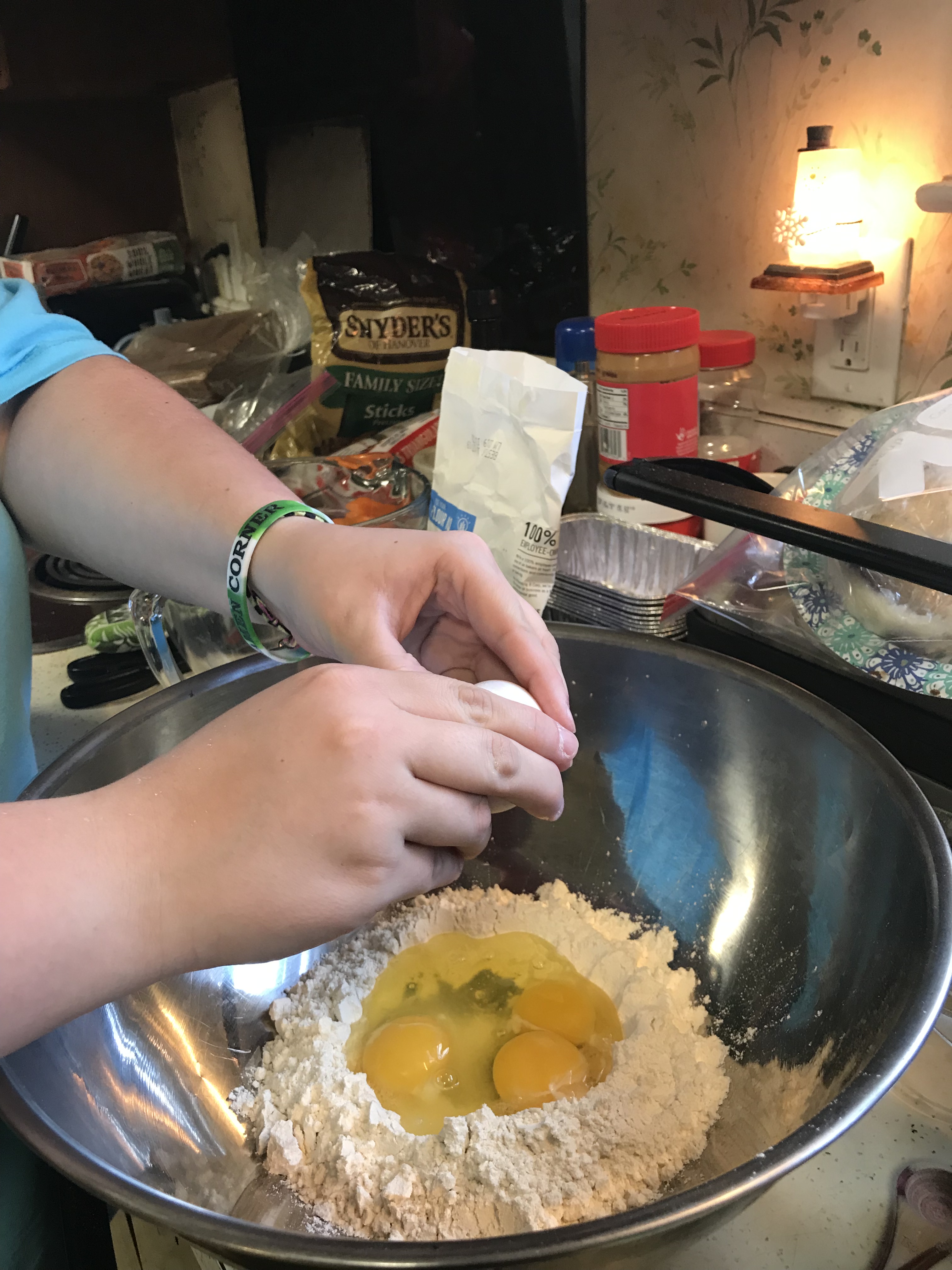
While you wait for it to rise- Place remaining flour into a bowl, making a ring. Put in the salt, sugar, and then “egg.” This is where Artusi was not the most clear in his directions. He did not specify the number of eggs to place in the circle of the flour, so I went a head and placed all 6 eggs (as pictured below). However, I found out later on that I was only suppose to place 1 egg- but the recipe still turned out fine so oh well!
flour placed in a circle
Adding salt and sugar
Adding in the egg(s)… oops!
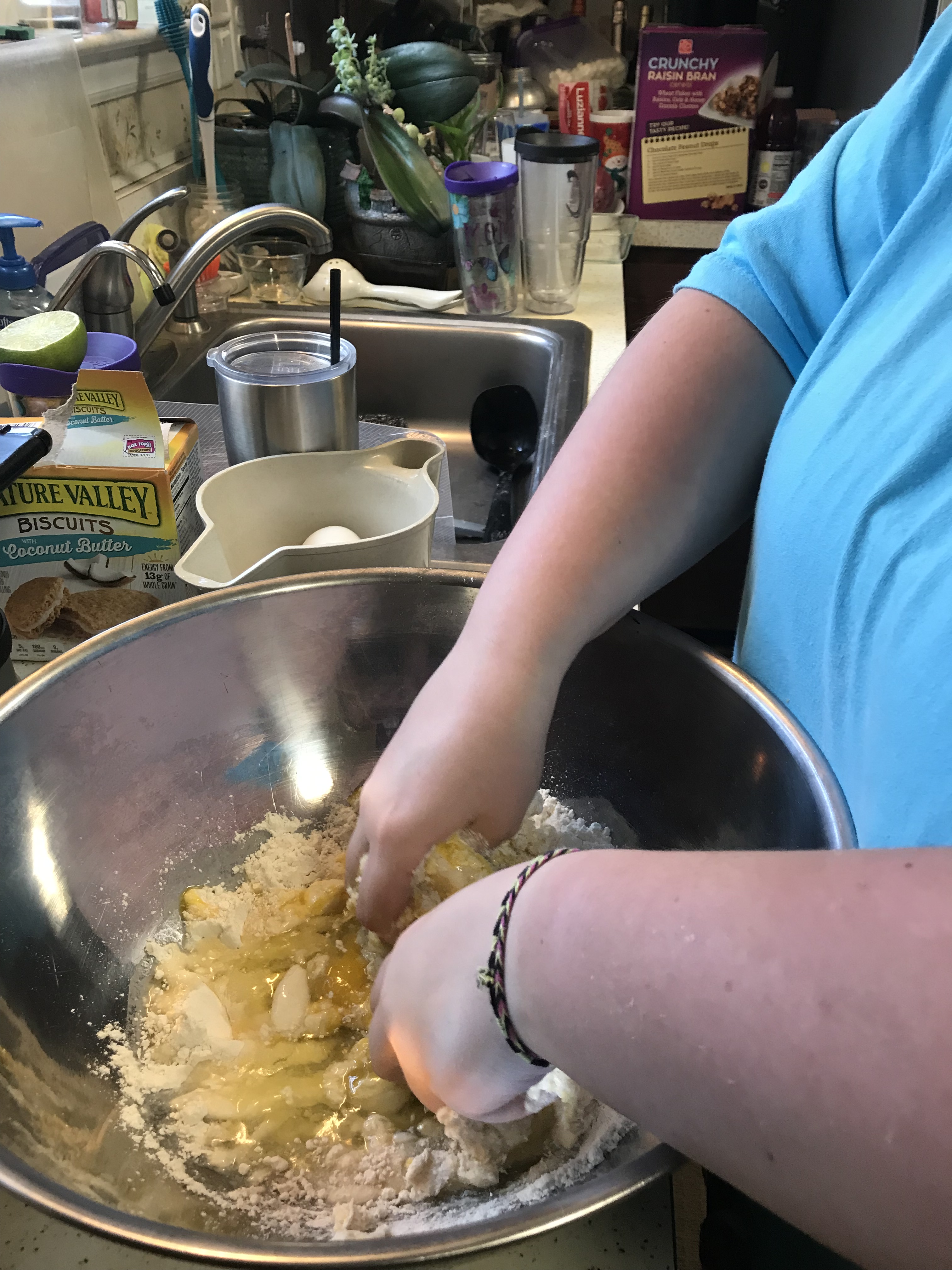
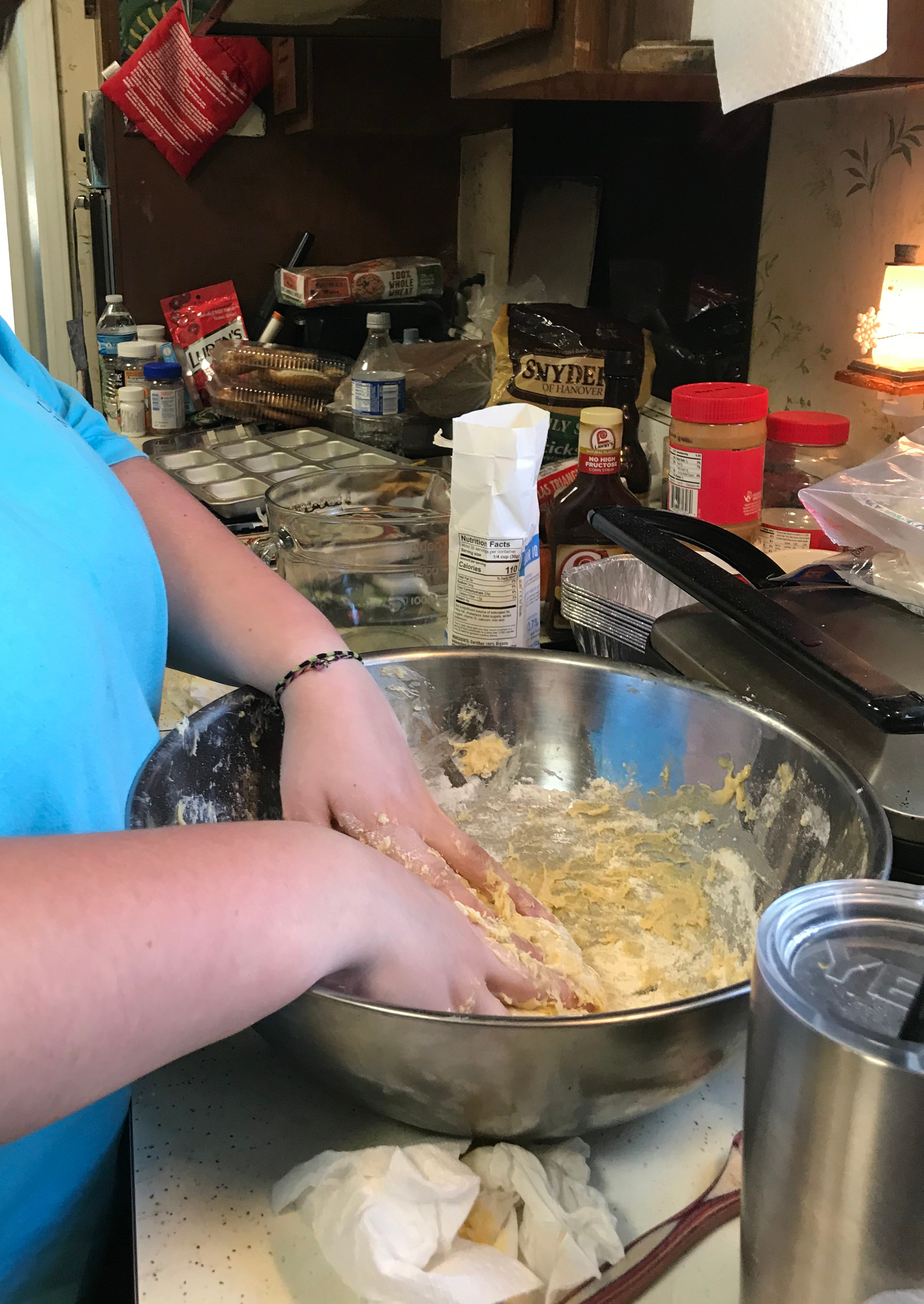
You then begin to mix it all together using your hands
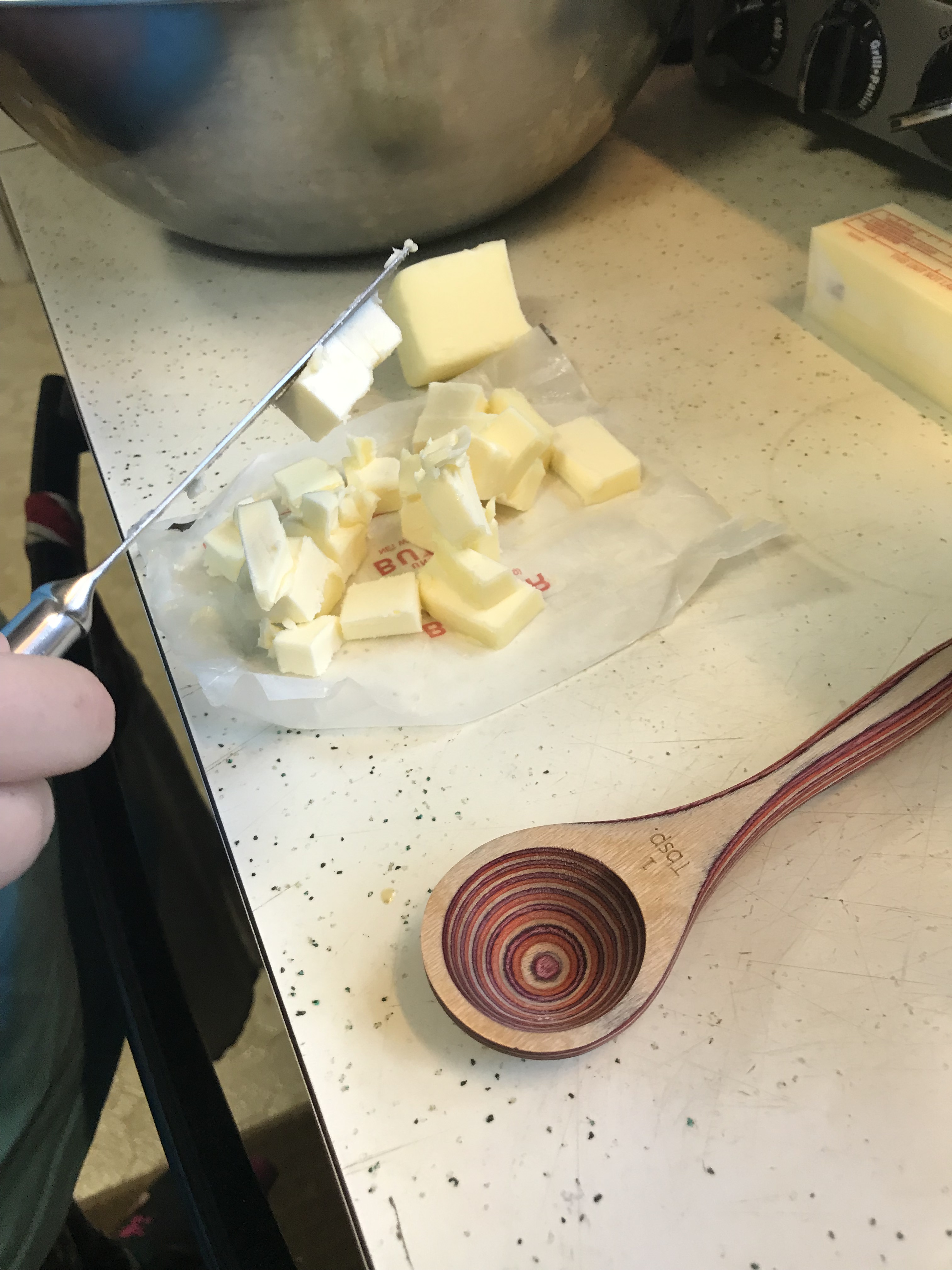
once well incorporated, you cut up the butter into small pieces and place it in the mixture
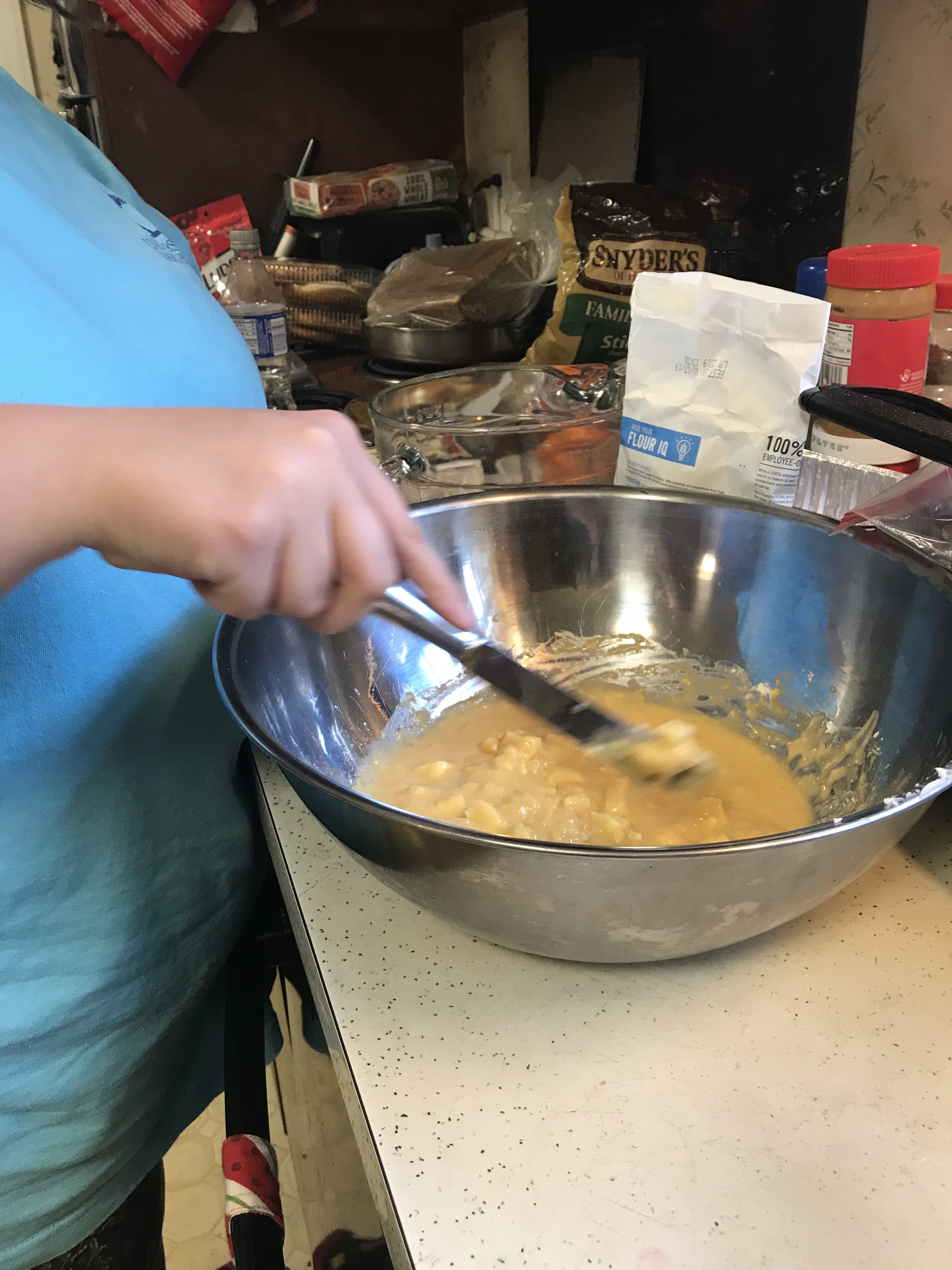
You begin by mixing the butter into the mixture using the blade of a knife
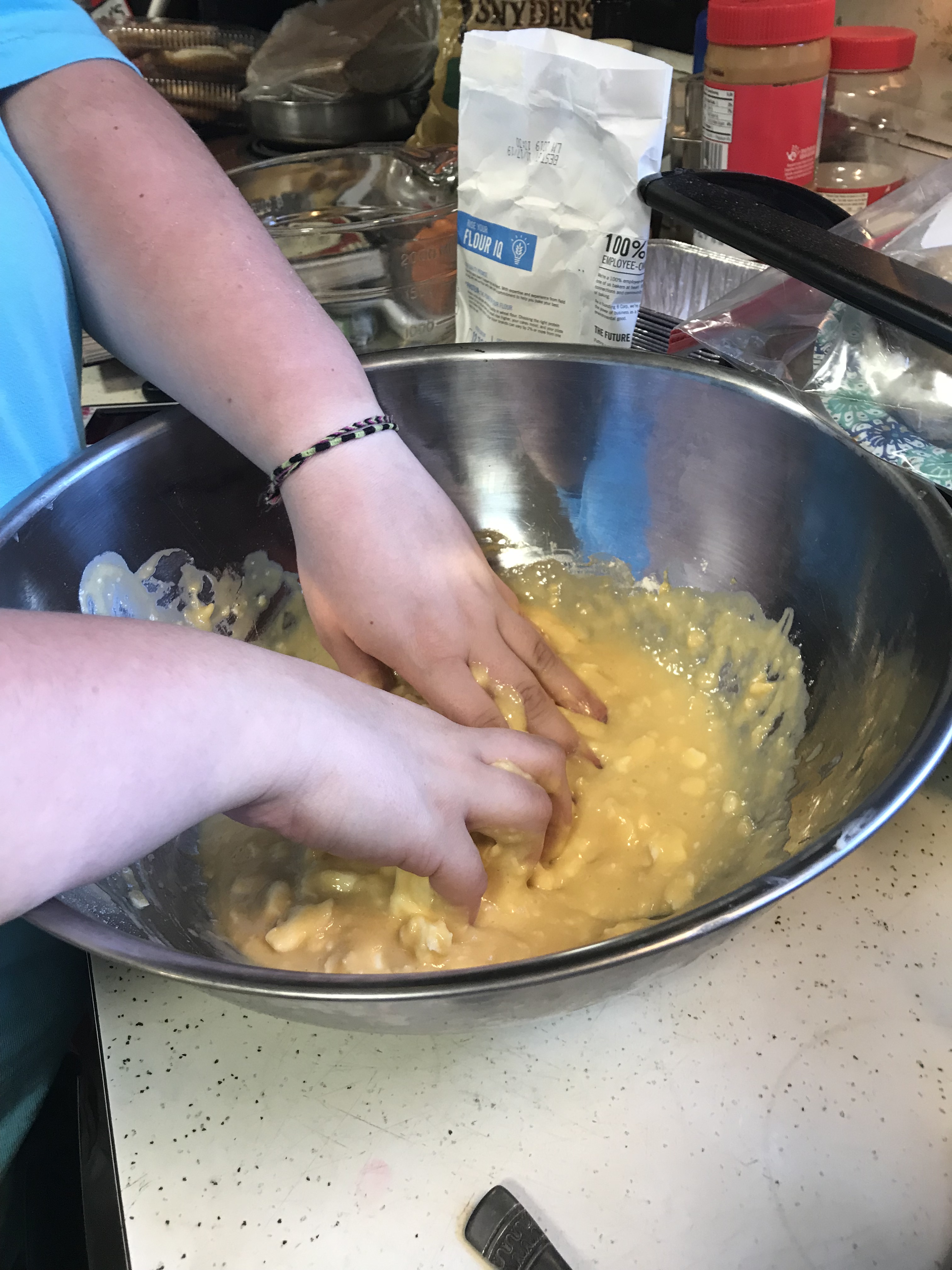
You then use your hands to finish working in the butter
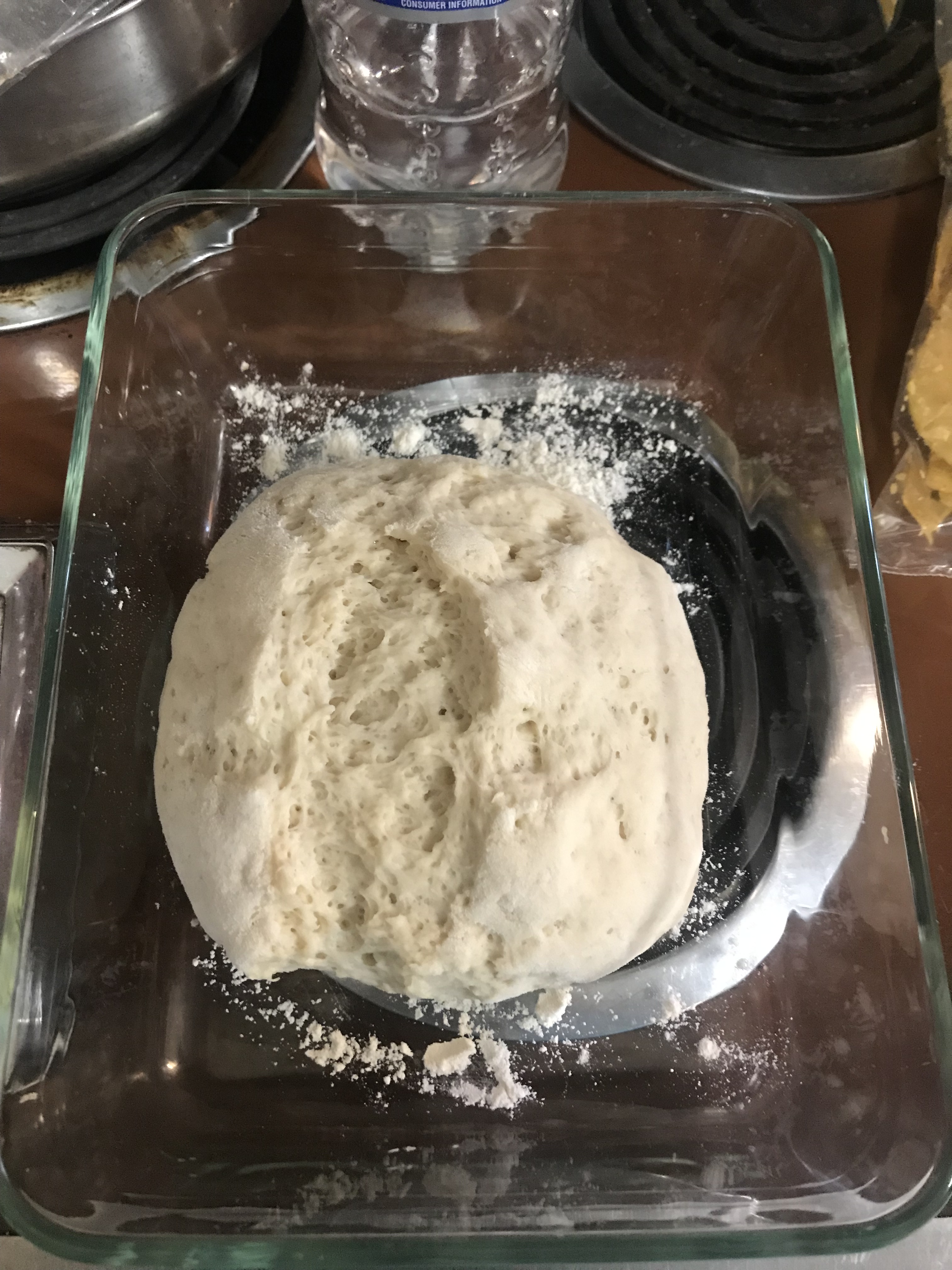
You then bring out the dough that you have been letting rise. By now it should at least have doubled in size!
Next, you place the dough that has been rising into the new dough mixture you just finished making. You knead them together until both dough’s are fully combined.

Let the mixture sit in a warm unventilated place to rise

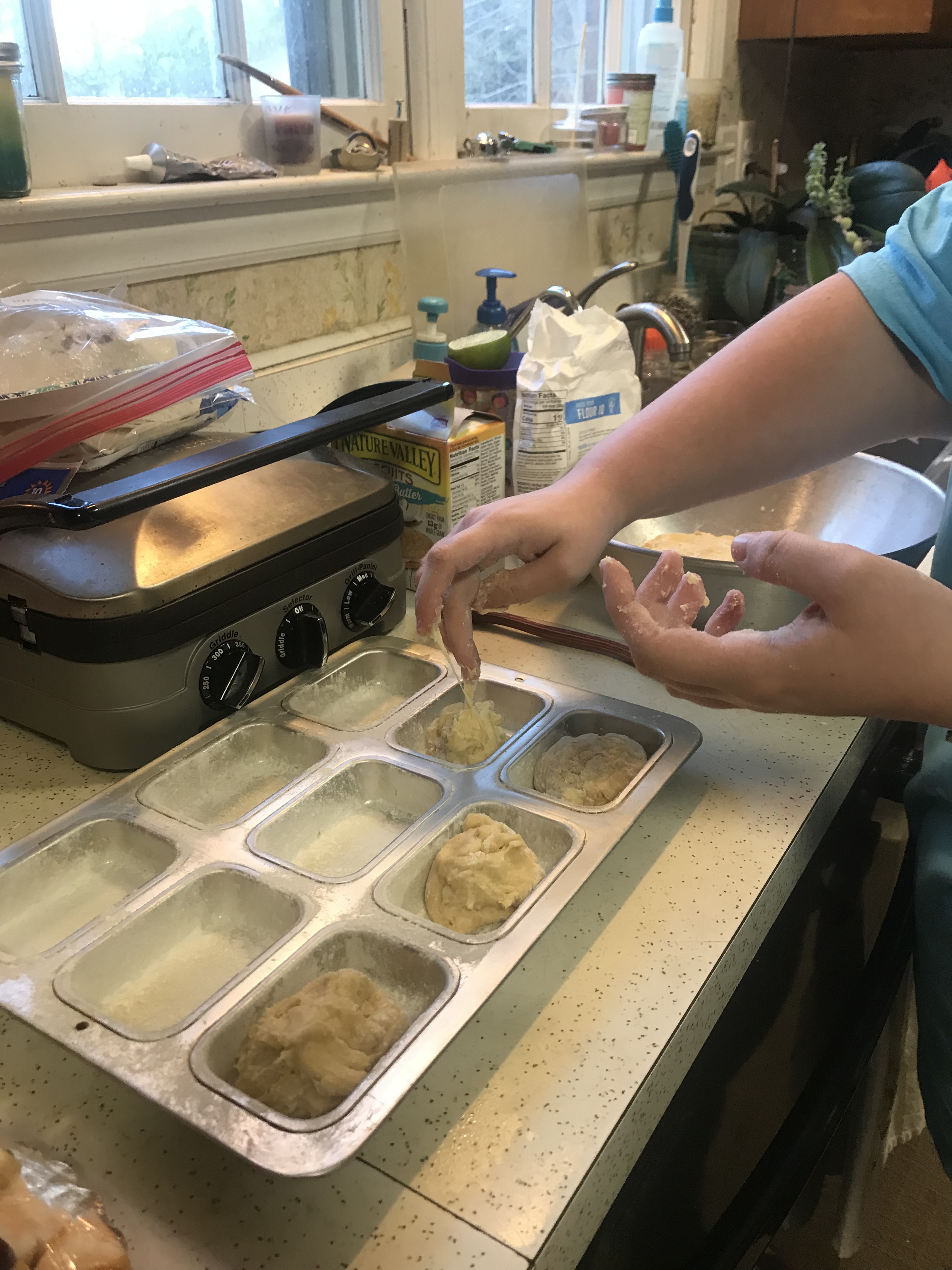
Once it has risen, separate it into pieces and bake. We used a mini “bread loaf” pan. Make sure to cover each section in flour to prevent sticking (this is when the recipe mentions mixing flour and confectioner’s sugar to dust the sections)
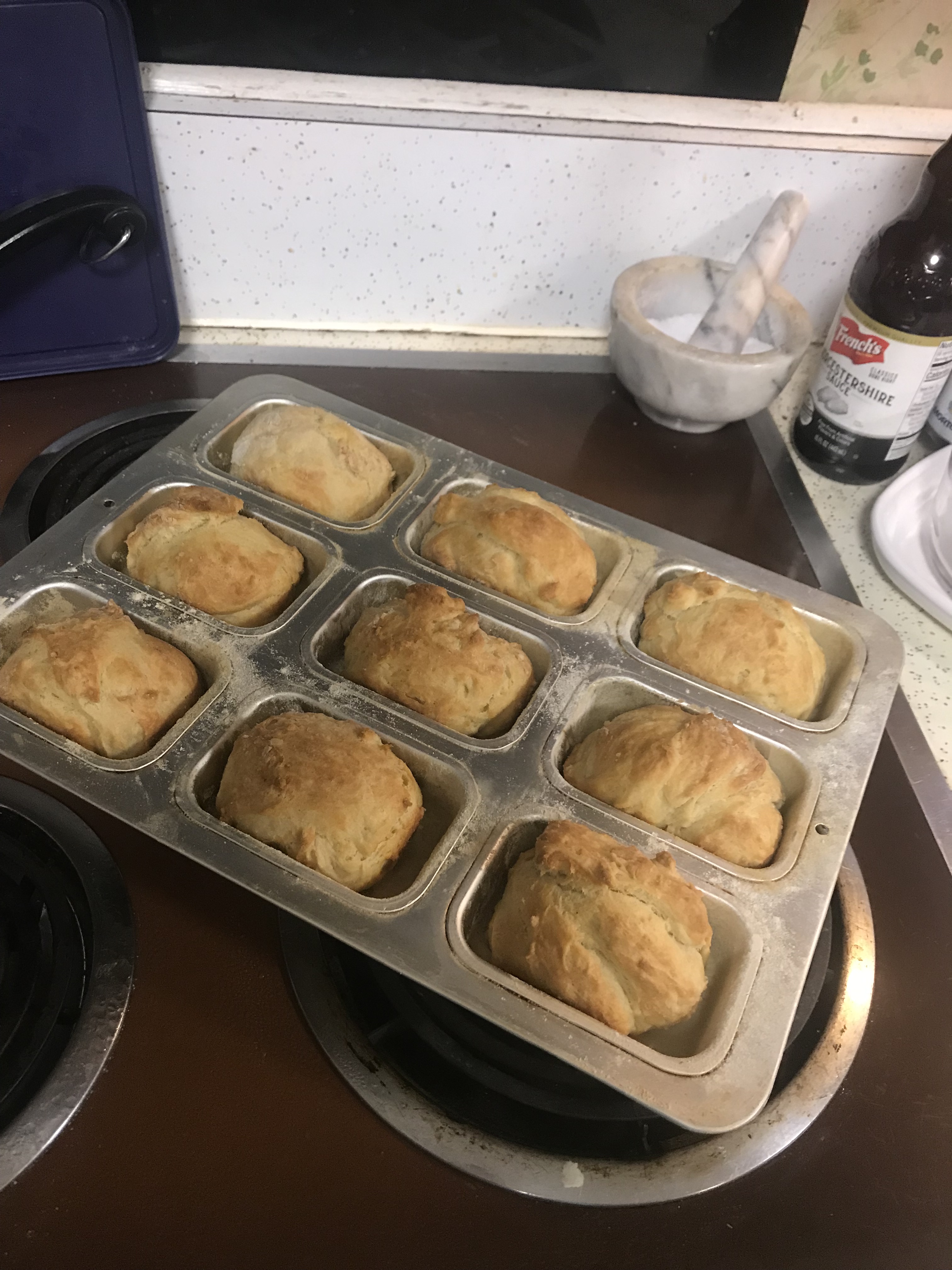
Tah-Dah! After 25 minutes in the oven on 350 degrees, we have bread! I suggest serving with jelly because they’re kind of dry. We used Blackberry jam and it was very yummy!

Overall, I am very happy with how my little bread loafs turned out and when I took them to my Italian Cuisine class on Monday to share everyone said they were yummy! So, I definitely will be making these again and totally recommend you trying to make them at home!

American vs. Italian- Frozen Treat Edition
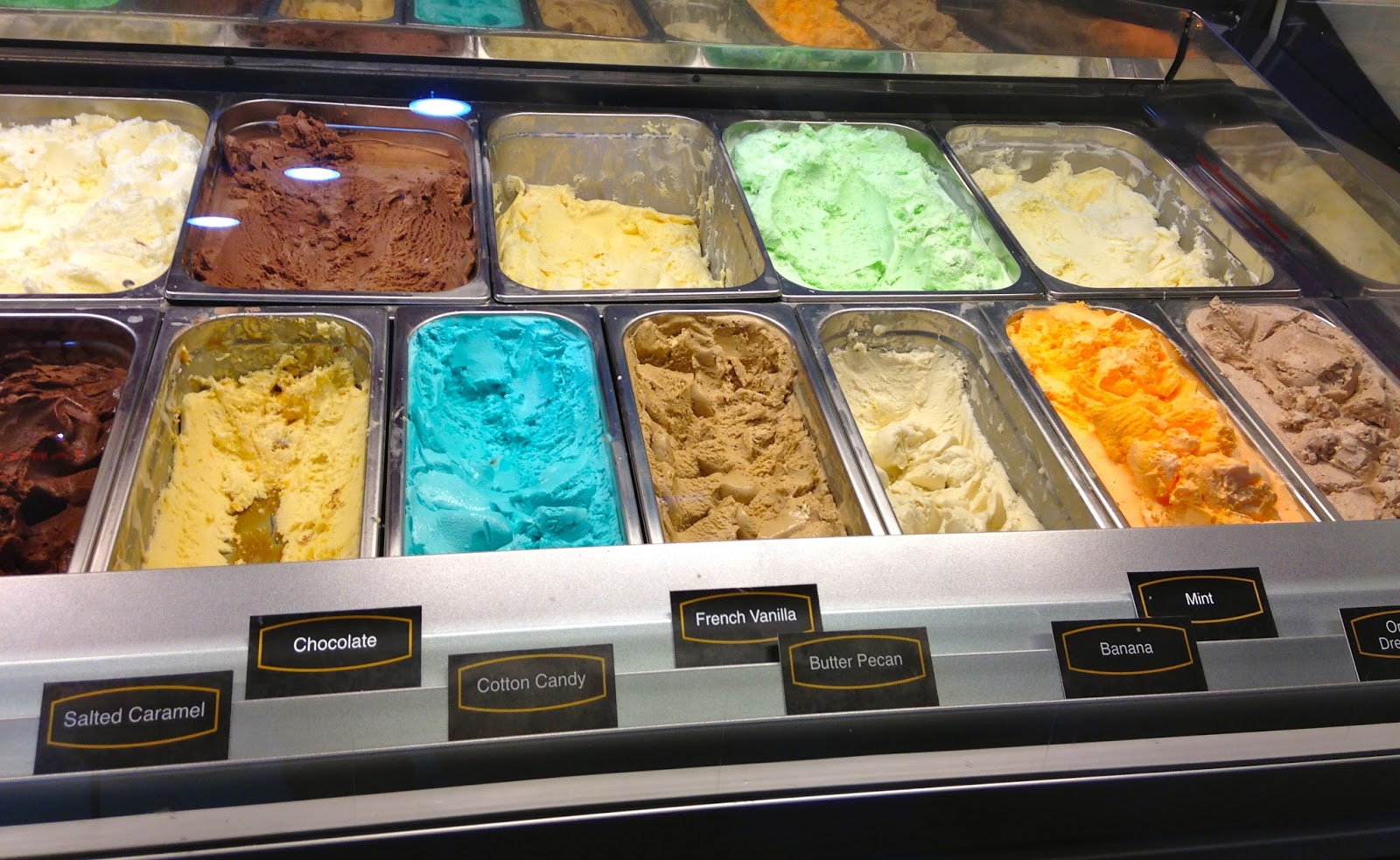
After a previous post where I looked at American pizza versus Italian pizza, I was curious about what the difference was between another Italian dish and its American cousin… that dish would be ice cream! I LOVE ice cream, it’s definitely one of my favorite desserts! I’m someone who could eat it everyday, regardless how cold it is outside. I’ve also had gelato before, which is also very yummy!
Due to having eaten both styles before, I’m aware that there is clearly a difference in the density between ice cream (American) and gelato (Italian). So, first I wanted to look into this obvious difference before diving into some less noticeable differences between the two.

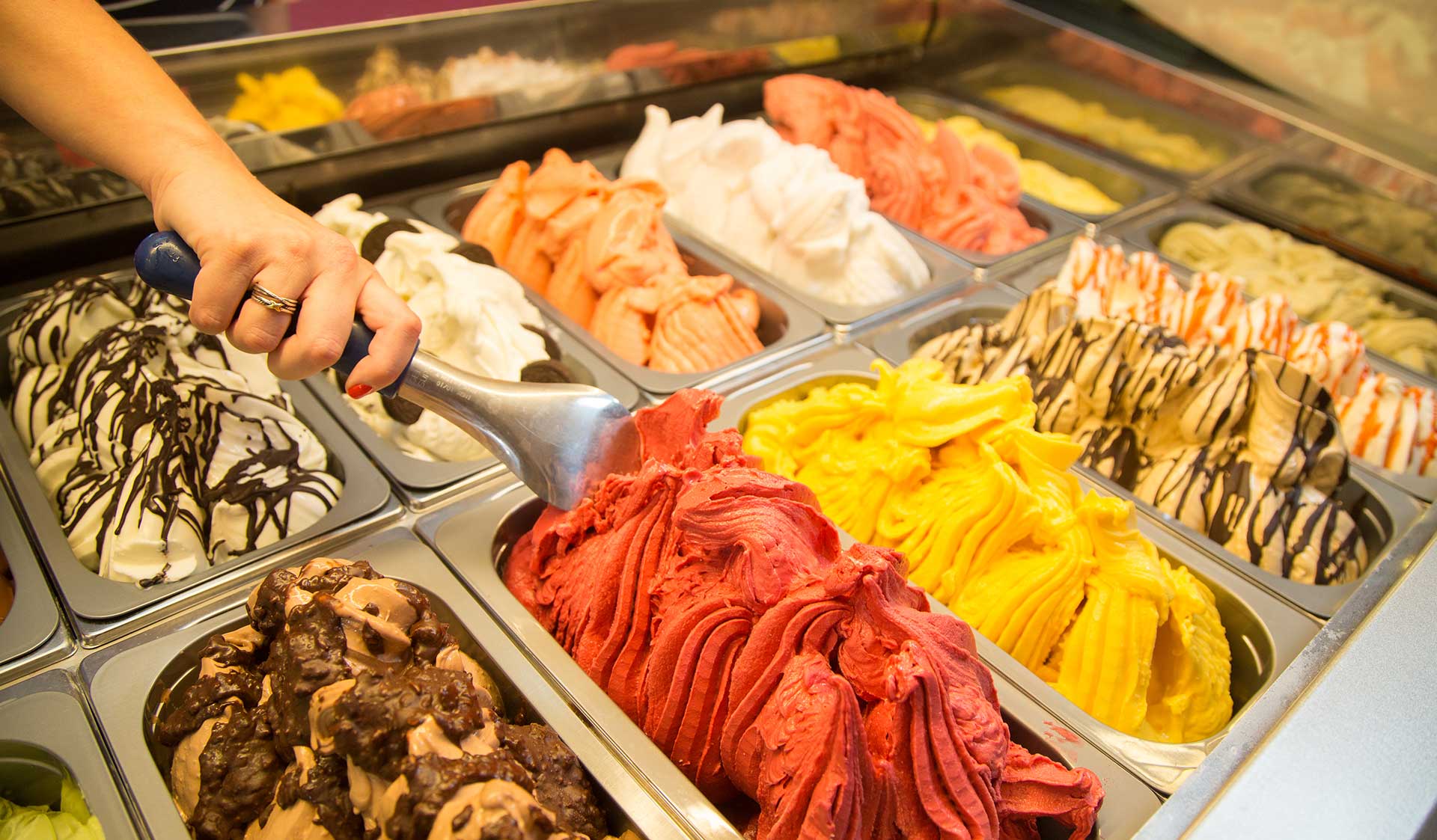
Gelato

When researching the difference between density, I learned that the big difference between ice cream and gelato that related to the density has to do with the amount of air churned into in. Ice cream can have 50% or more air churned into it which makes it less dense, compared to gelato which only has about 20 to 30 percent of air churned into it.

Another difference I learned about while doing research is that there is actually a difference in temperature between the two frozen treats. Gelato is served 10 to 15 degrees warmer than American ice cream. This is because the warm temperature reinforces the creamy texture of the gelato and the bold flavor, as it melts in your mouth quicker than ice cream.

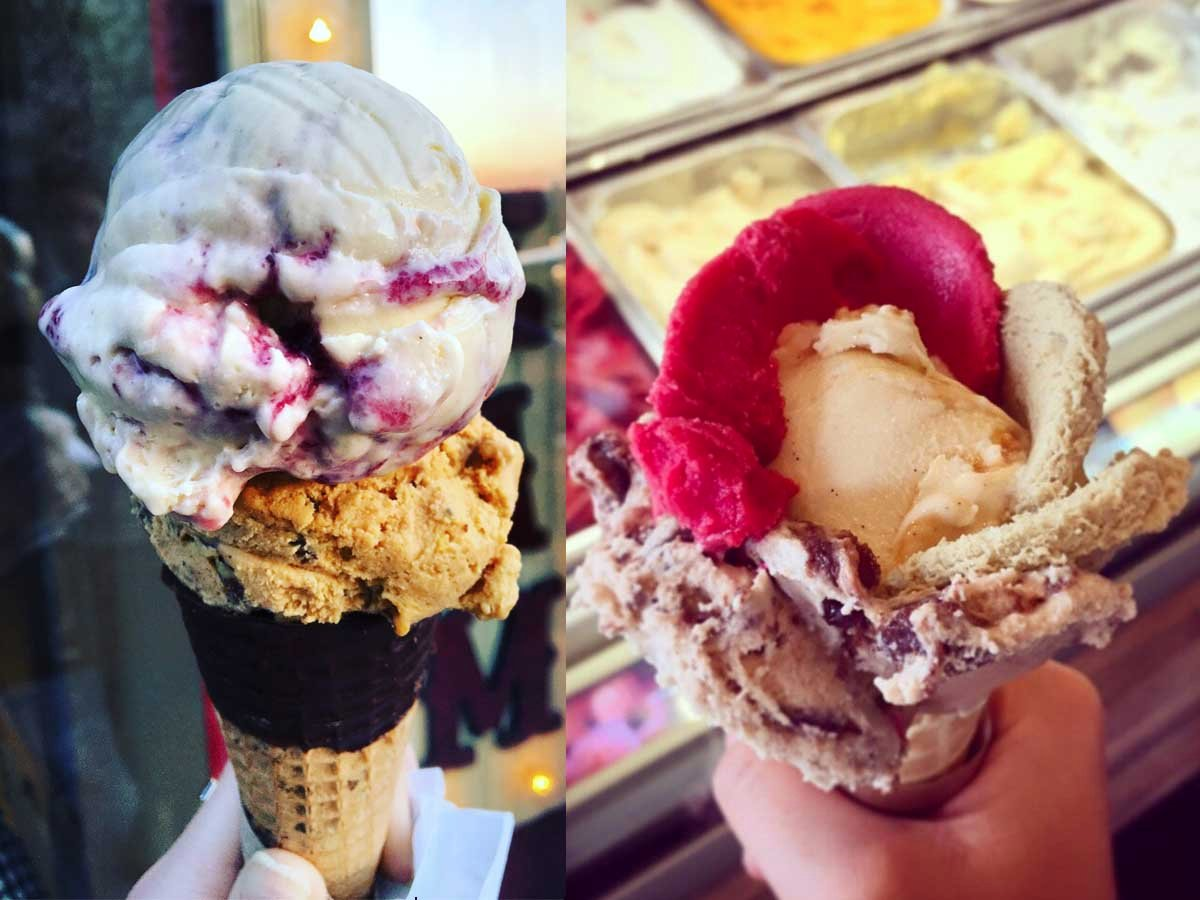
Ice Cream

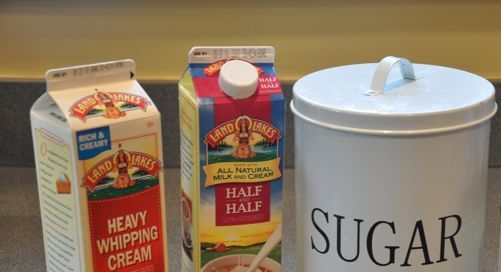
The next thing I wanted to look at was the difference in ingredients. I learned that one of the big differences is that gelato is much lower in butterfat than American ice cream. Ice cream contains about 14 to 25 percent butterfat, compared to gelato which only contains about 4 to 9 percent. So, I was curious if there were any other differences between ingredients. To find out, I turned to google. I learned that American ice cream is made from dairy milk or cream, or soy, cashew, coconut or almond milk, and is flavored with a sweetener, either sugar or an alternative, and any spice, such as cocoa or vanilla. Coloring’s are usually added, in addition to stabilizers. Gelato on the other hand
is generally a mixture of custard, cream, and milk, without eggs. Gelato is made with a base of milk and sugar. So some of the key differences are that gelato is typically made with more milk than cream, compared to ice cream, and ice cream usually involves egg yolks and gelato does not.

Clearly, American ice cream tends to have more ingredients in it than gelato. Based on that result, I was curious to see if there was anything out there stating if one was “healthier” than the other. After looking up the nutritional facts on www.healthyeating.sfgate.com where they compared gelato and ice cream I learned that
depending on the type and portion size you choose, gelato may not always be a healthier option than ice cream. They also point out, that due to the difference in density one scoop of gelato would weigh more than one scoop of ice cream. So while a highly precise nutritional comparison of the two frozen desserts may be elusive, you can still come close by comparing a 3.5-ounce serving, or about 1/2 cup: Vanilla ice cream contains 7 grams of fat, 14 grams of sugar and 125 calories, compared to vanilla gelato which contains 3 grams of fat, 10 grams of sugar and 90 calories. So, while their may be less ingredients, Gelato is not always the healthier option, it all comes down to portion control and flavor.

Ice Cream and Gelato

So in conclusion, both make for a yummy sweet treat and you can’t go wrong either way. One tends to be creamier and denser, gelato, and the other is lighter and colder. When looking at the ingredients, one appears as if it would be healthier due to less ingredients and fat, however, the nutritional facts state like with any food it comes down to the size and specificity of that particular item, in this case the flavor. But, if you ask me, I’m just going to keep telling myself gelato is the healthier alternative so I can justify going to get some!

Reggio Meets Cuisine and Culture

As you all probably know by know if you’ve read any some of my previous posts, I’m a child development major taking on a semester of Italian cuisine and culture. One of my previous posts looked at the way the Montessori education model did snack time, so I was thinking why not look at other Italian education models and how they do snack time as well. So, for this weeks entry I figured I would dive into the Reggio Emilia education model and how they go about food.

Before we dive into the food aspect of Reggio, I want to give some background on what this model is all about. The picture below is of Loris Malaguzzi. He created this model after World War II with the help form educators, parents, and teachers. This model is very family-centered meaning that both family involvement and engagement are a huge part in the day to day way of doing things at these types of schools. Similar to Montessori (see previous post: Montessori Meets Cuisine and Culture), both of these models were created in Italy and believe in hands-on experiences where the children decide on the activities they partake in and the teacher acts more so as a guide in the classroom.

Loris Malaguzzi

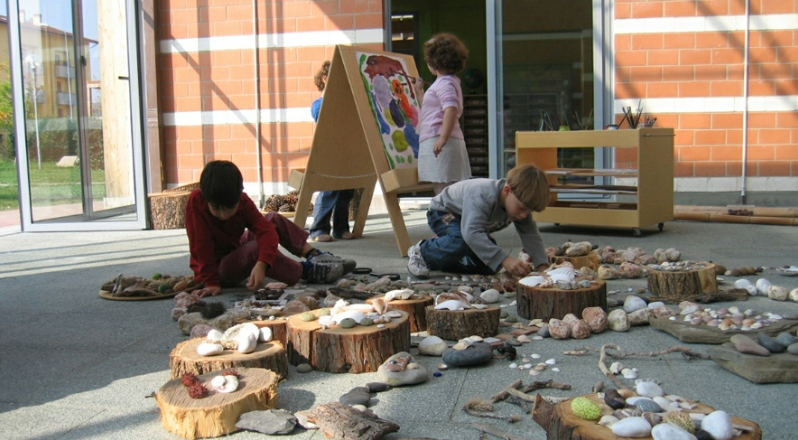
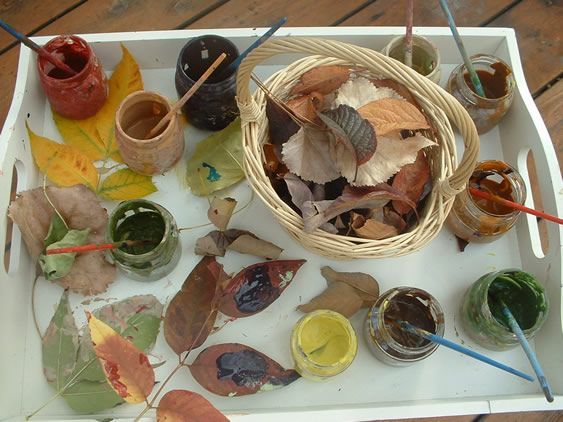
Some of the distinguishing factors about Reggio inspired schools are that natural light and nature materials are a huge part of their exploration.

If you’re interested in learning more about the Reggio Approach- here is a short overview of the whole approach:
https://youtu.be/cvwpLarbUD8

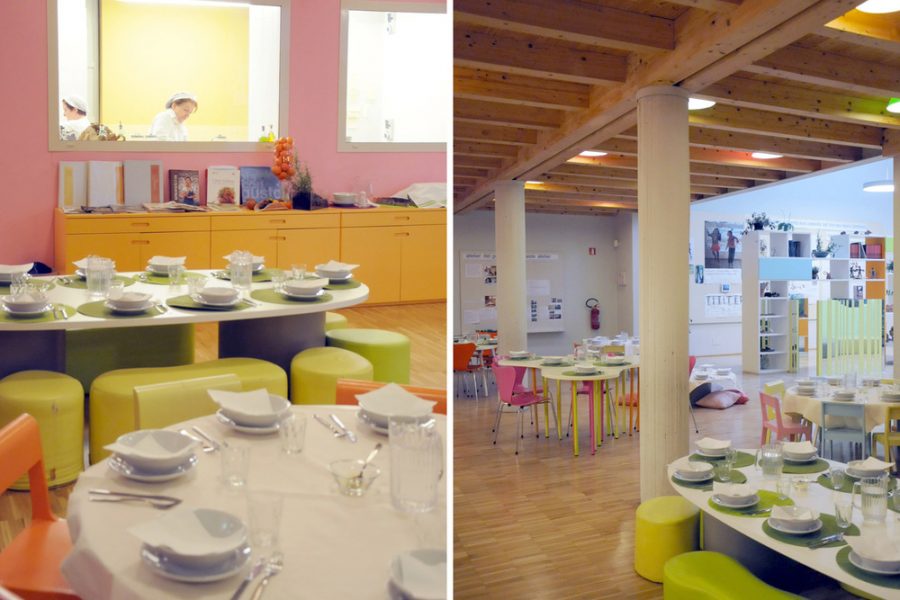
Now into the main part of this entry- the food! Going into this I did not know much about the food aspect of Reggio, compared to the Montessori post where I knew a lot more coming into it. What I learned from several “personal experience” like articles is that the kitchen consists of one cook and two assistance. Kitchens in Reggio schools are welcoming, being visible from the entrance, and are purposely placed in a central location to act as a link between each room in the Centres. Their kitchens have as much thought put into them as the incredibly detailed and well equipped art and project ateliers also found in each Centre. Kitchens are thought of as “a place of chemistry”, not just a place where food is prepared. They are bright and clean and have large windows to bring visibility to the cook’s contribution and care of the children and adults through their daily preparation of meals and snacks.

This is an example of what the kitchen/ meal area in a Reggio school might look like

As in any home, the kitchen in Reggio is where the family gathers, and where children always feel welcome to enter and ask the Cook questions. It’s not uncommon for when the children ask questions such as “what’s for lunch?” to be taken into the kitchen to ask the chef themselves. The cook will speak to the children and pointed to each dish they are preparing. The children were able to look, touch, smell and even help prepare the food. Meal times in Reggio are held in high regard. The children and educators all eat together in one dining room. Food is very intentionally and thoughtfully presented in the most beautiful manner and brought to the table and served in family sized bowls. They believe that “it’s the experience of food, rather than the feeding of children.”

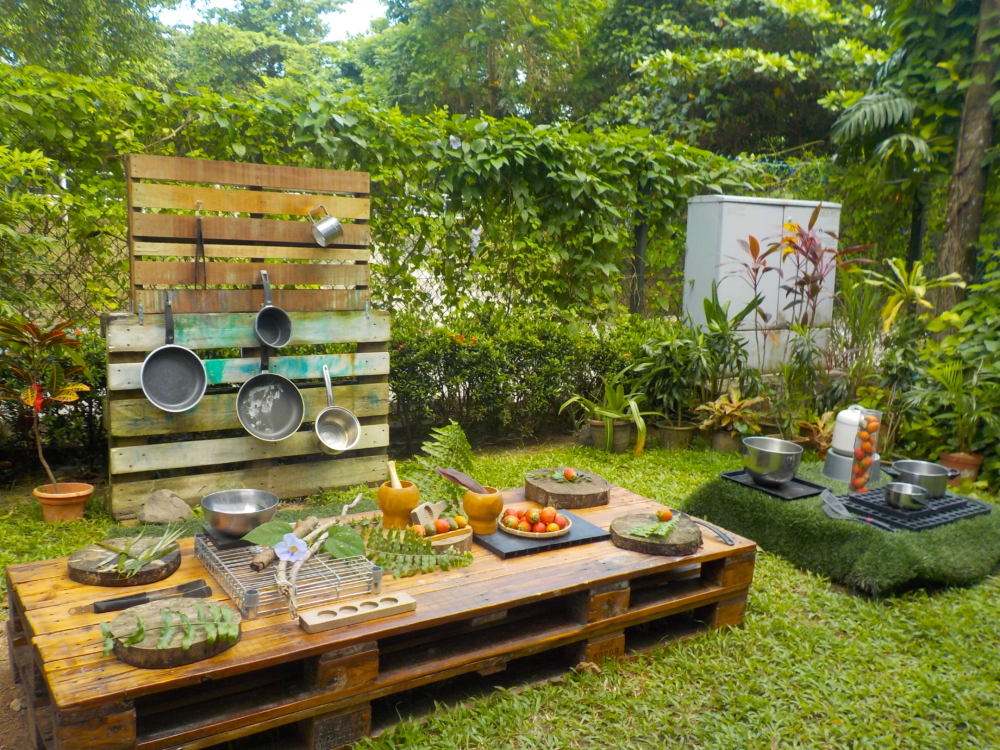
Great emphasis is placed on using organic and local produce. Many of the Centres grow their own produce in gardens the children tend and harvest. The Cook shared how they strive to offer as many flavors, such as sweet, salty, savory, bitter and sour, as possible at each meal to appeal to the children’s senses, as well as food with different textures, like soft and crunchy. The cooks in Reggio Emilia have experimented for many years to develop simple, yet highly digestible foods that children enjoy.

This is an example of the garden space they might have at a Reggio school.

Overall, the Reggio Emilia Approach to snack time and meals is very focused on the process rather than the product. They want to provide the children with healthy options that expand their knowledge and experiences, rather than just give them something to eat because that’s their job. I personally believe that this is a cool approach to meal time because it allows the children to learn and explore where their food comes from and different types of foods to eat.

American vs. Italian- Pizza Edition

I’m someone who could eat pizza all the time. I am a picky eater so I often opt for just cheese, but this is one dish I will adventure outside my comfort zone with sometimes. With this said, my love for pizza and a recent trip to a NY Style pizza place, left me asking the question “what’s the difference between American pizza and Italian pizza?” Two of my favorite pizza places of all time are both NY Style- Mario’s Pizza in Greensboro, NC and Gino’s Real New York Pizza in North Myrtle Beach, South Carolina. So, I was curious so learn about the difference between my favorites and the authentic Italian version, since American pizza is derived from Italian pizza. What I found out through research was quite interesting.

I first decided to look at the difference in how they looked, before looking at some of the history and facts about each type.

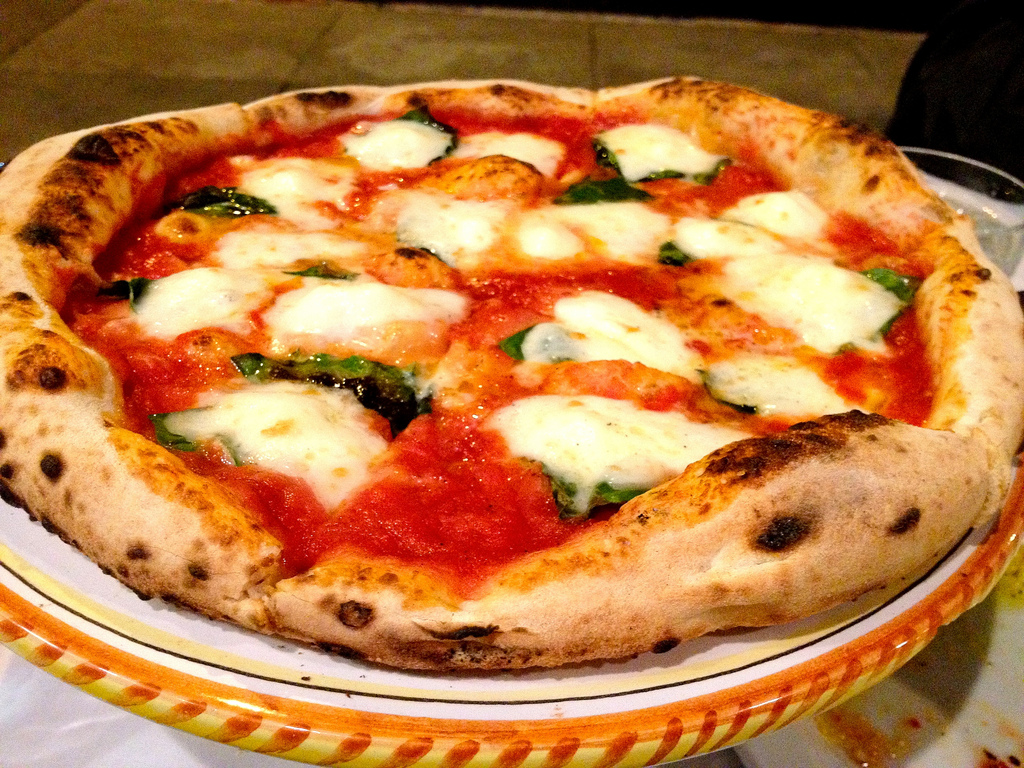
In this picture, you see an image I found online of an authentic Neapolitan pizza that you would find in Italy
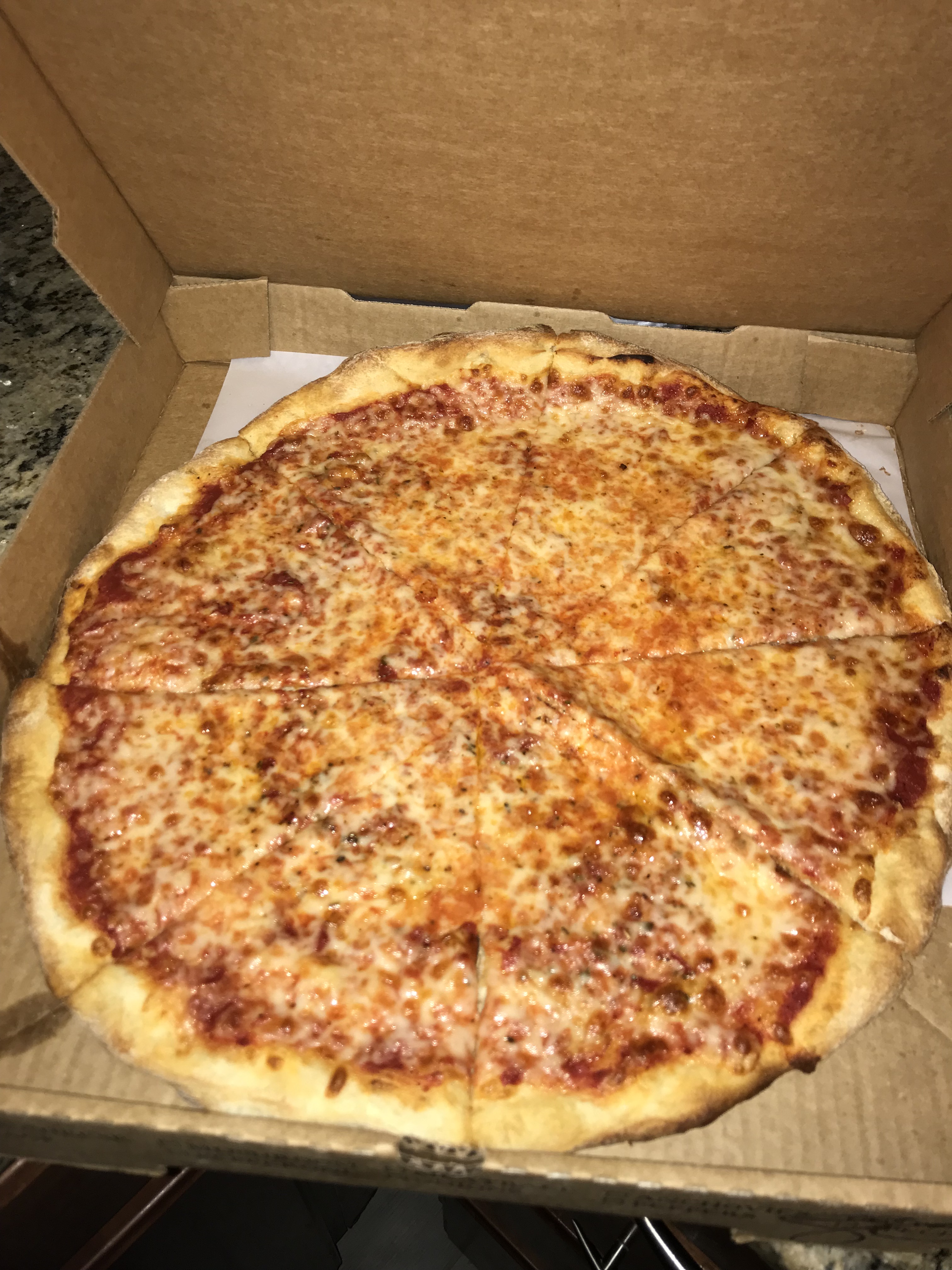
In this picture, you see a photo I took over spring break from Gino’s Real New York Pizza

As we can tell from the two photo’s above, There are some obvious visual differences between the two types of pizza. The authentic version has a more prominent crust, and what appears to be a more simple arrangement of ingredients on top (very similar to the pizza I had in my first blog post when I visited Vic’s). In the second picture, which is a NY Style pizza, there is clearly a “thinner” crust than the authentic version. There is also cheese spread out across the whole pizza more than the other, and there is visibly more grease on the NY Style.

Other than the visual differences, I looked up what some of the history and key differences between the two types of pizza. What I learned was that the first pizza to pop up was what we now know as Pizza Margherita, which is what’s pictured above for the authentic image. Pizza Margherita is a pizza topped with tomatoes, basil and mozzarella. This pizza was Queen Margherita of Savoie’s favorite which is how it got its name. During this time there was no such thing as “American pizza,” so how did it come about? Apparently, the first pizza sold commercially in the US was focaccia, a thick- crusted version of pizza that may also be referred to as what we know as “pan pizza.” These pizza’s were available in Italian bakeries, and the first pizzeria in the Little Italy section of New York City was opened by Gennaro Lombardi, originally from Naples, in 1895.

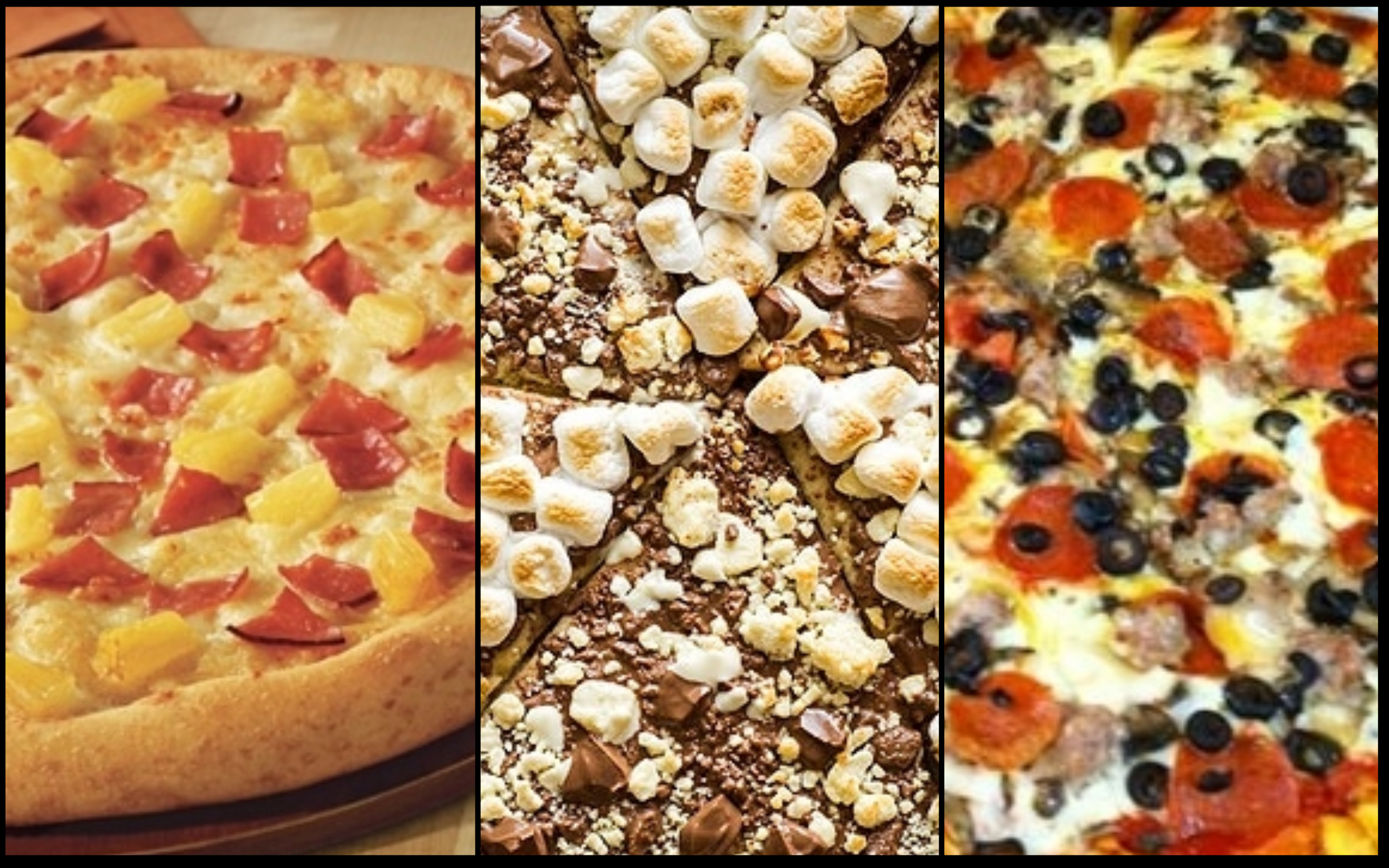
After this, pizza greatly increased in popularity in the US both as a cheap meal-in-one food during the great depression and with the return of the US serviceman from Italy at the end of the second world war. Standardized fast-food versions of pizza emerged, but with the growing interest in cuisines from other cultures that blossomed in the late twentieth century, pizza was affected as well. The US, defintley became more experimental with the toppings they placed on pizza.

Such as the pizzas seen above. The US has been experimental by adding fruit such as pineapple on pizza, adding an abundant amount of toppings on a pizza at one time, and even creating dessert pizza’s that consist of chocolate and other sweets. They also got experimental with the styles of crust, as seen in the picture of the authentic pizza, their crust looks to be more dense and thick. Today, in the US, we have thick, thin, extra thin, deep dish, pan pizza, and so many more different types that change the overall texture of the pizza because some are softer and others may be crunchier.

In the end, I learned that the difference between Italian and American pizza and the similarities between them as well depend on the same, most important ingredient- the person making the pizza. Everyone has a different idea and preference for what type they like better, I like NY style, you might prefer the Neapolitan style, and someone else might really like Chicago style. In the end it is all about preference. The US used some of the basics from the authentic version and made it their own by being experimental with the toppings and styles of crust, but if you go back to the basics of how a pizza is made they all incorporate the same things. They all have a crust, the authentication and amount of each ingredient might differ from one to the next, but they are still ending up with a dough. Some might use fresher and less toppings than the other, but they are still pizza. Like with anything, we all have a preference on how to do things, but usually we all start off with the same general goal, and accomplish the same outcome- what we do in between may differ but that’s okay because that helps add a special uniqueness to whatever we are trying to accomplish, in this case pizza.

Partyin’ on a Tuesday

As some of you may know, this Tuesday, March 5th, is Mardi Gras (or you could be like me and knew it was sometime soon but didn’t realize just how soon). In the United States, we associate Mardi Gras with New Orleans, purple, green, and gold colors, beads, and a massive parade full of unique traditions. For a deeper understanding of what exactly Mardi Gras is I turned to google to learn some more. Mardi Gras, or “Fat Tuesday,” refers to events of the Carnival celebration, beginning on or after the Christian feasts of the Epiphany (Three Kings Day) and culminating on the day before Ash Wednesday (known as Shrove Tuesday). I also learned that Mardi Gras is also celebrated in different places around the world.

So, I was curious what Mardi Gras might look like in Italy, and what I found out was quite interesting. Mardi Gras, or Carnevale in Italy has roots in pagan festivals and traditions and, as is often the case with traditional festivals, it was adapted to fit into the Catholic rituals. Although Carnevale is actually one date, in Venice and elsewhere in Italy the celebrations and parties may begin a couple weeks before. Italy has many Carnevale celebrations , but Venice, Viareggio, and Cento hold the biggest and most elaborate festivals.

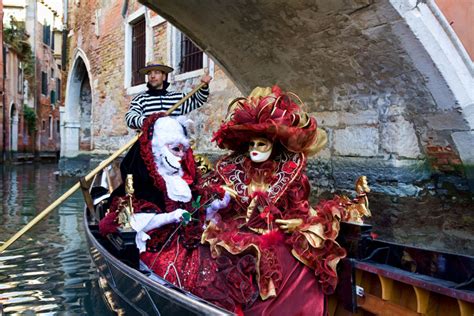
Carnevale in Venice

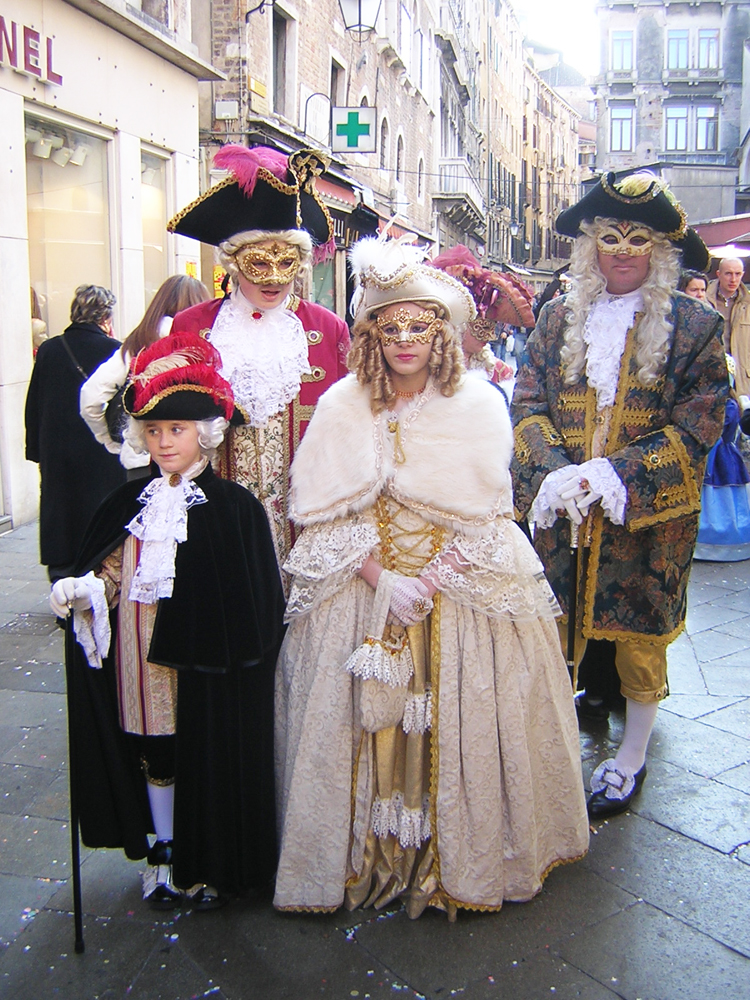
Masks, maschere, are an important part of the Carnevale festival and are sold year-round at many shops in Venice, ranging from cheap versions to elaborate and expensive ones. People also wear elaborate costumes for the festival and there are costume or masquerade balls, both private and public. Although the spirit and the tradition of these festivities are very different, Italians celebrate Carnevale just as Americans celebrate Halloween: they dress up.  Everybody dresses up and children love it. There is no “trick or treat” and horror theme, however. The focus is on having fun dressed as something or somebody else. Elementary schools and kindergartens usually cease the typical daily lessons and allow the children to enjoy a day-long party on school premises.

Example of the costumes worn during Carnevale

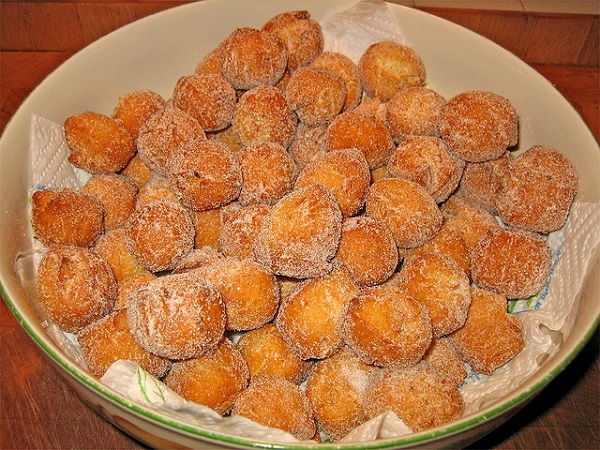
I was also curious about what some of the common cuisine is during this celebration. The typical sweets of Carnevale are the castagnole or the frappe, similar to doughnuts and pastries, both are deep fried and very tasty.

The castagnole are a fried pastry typical of the Carnival in Italy

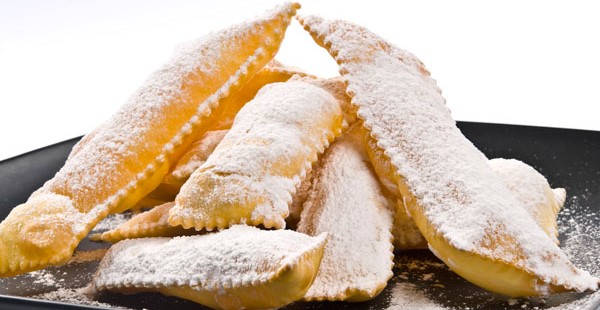
Another common food eaten during Carnevale is Chiacchiere, or Mardi Gras fritters. They are a crispy treat eaten throughout Italy during this time of celebration.

Chiacchiere

Overall, I found it to be very interesting to look at how another culture celebrates a holiday most people in the US associate with the uniqueness that occurs in New Orleans. I would definitely love to go see this fun-looking and unique celebration first hand one day!

A Picky Eater’s Food Review

Over the weekend I embarked on a new task in between lesson planning for my child development classes. I decided to try and make Cacimperio, or Cheese Fondue. I got the recipe from the cookbook “Science in the Kitchen and the Art of Eating Well” by Pellegrino Artusi, and it was recipe number 247. This recipe called for 400 grams (about 14 oz) of rindless Fontina Cheese, 80 grams (about 2-⅔ oz) of butter, 4 Egg Yolks, and Milk, as much as needed (enough to cover the cubes of cheese).


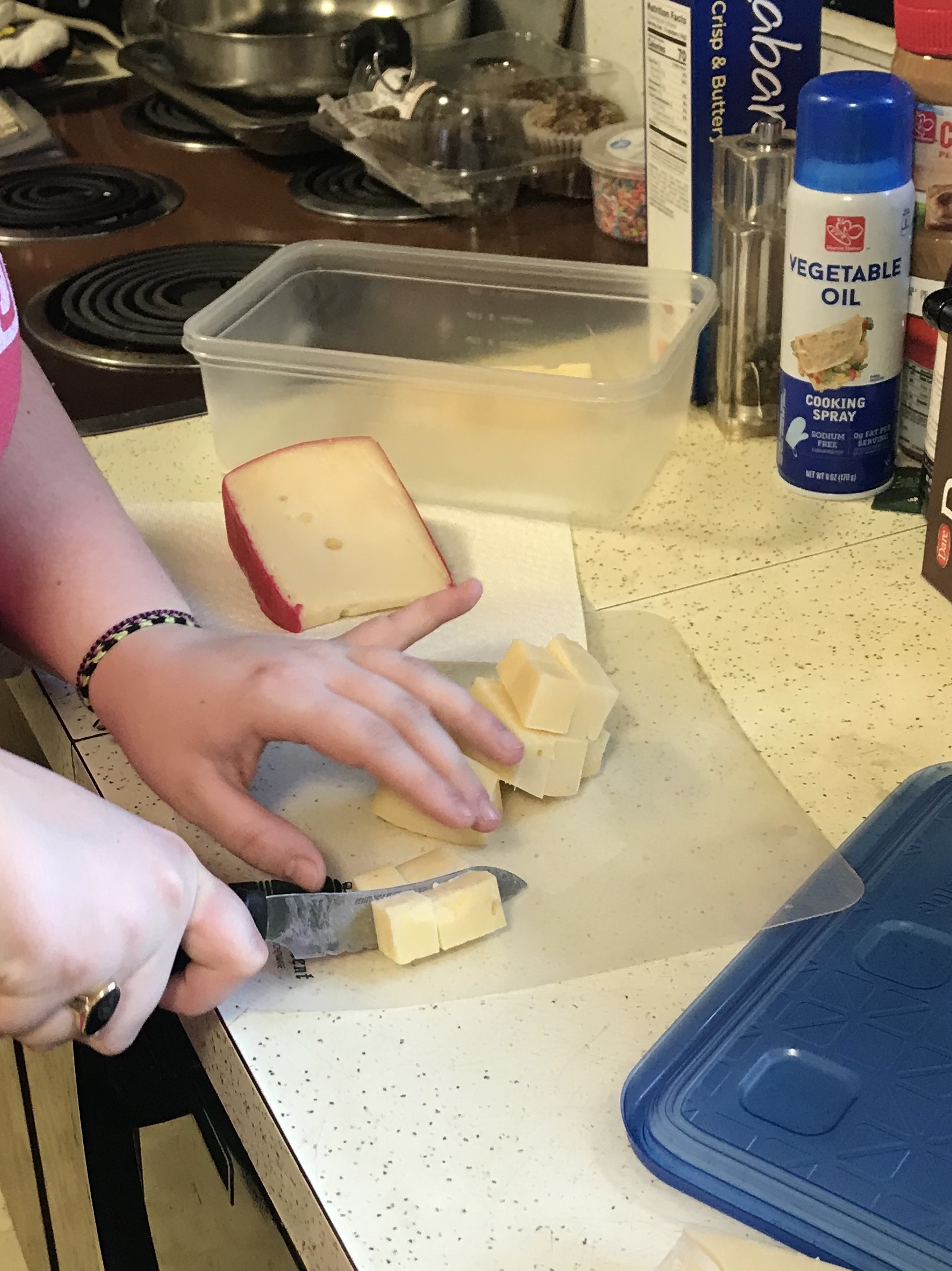
First, I was instructed to cut up the fontina cheese into small cubes. Fontina is a relatively soft cheese so this step wasn’t hard to do.
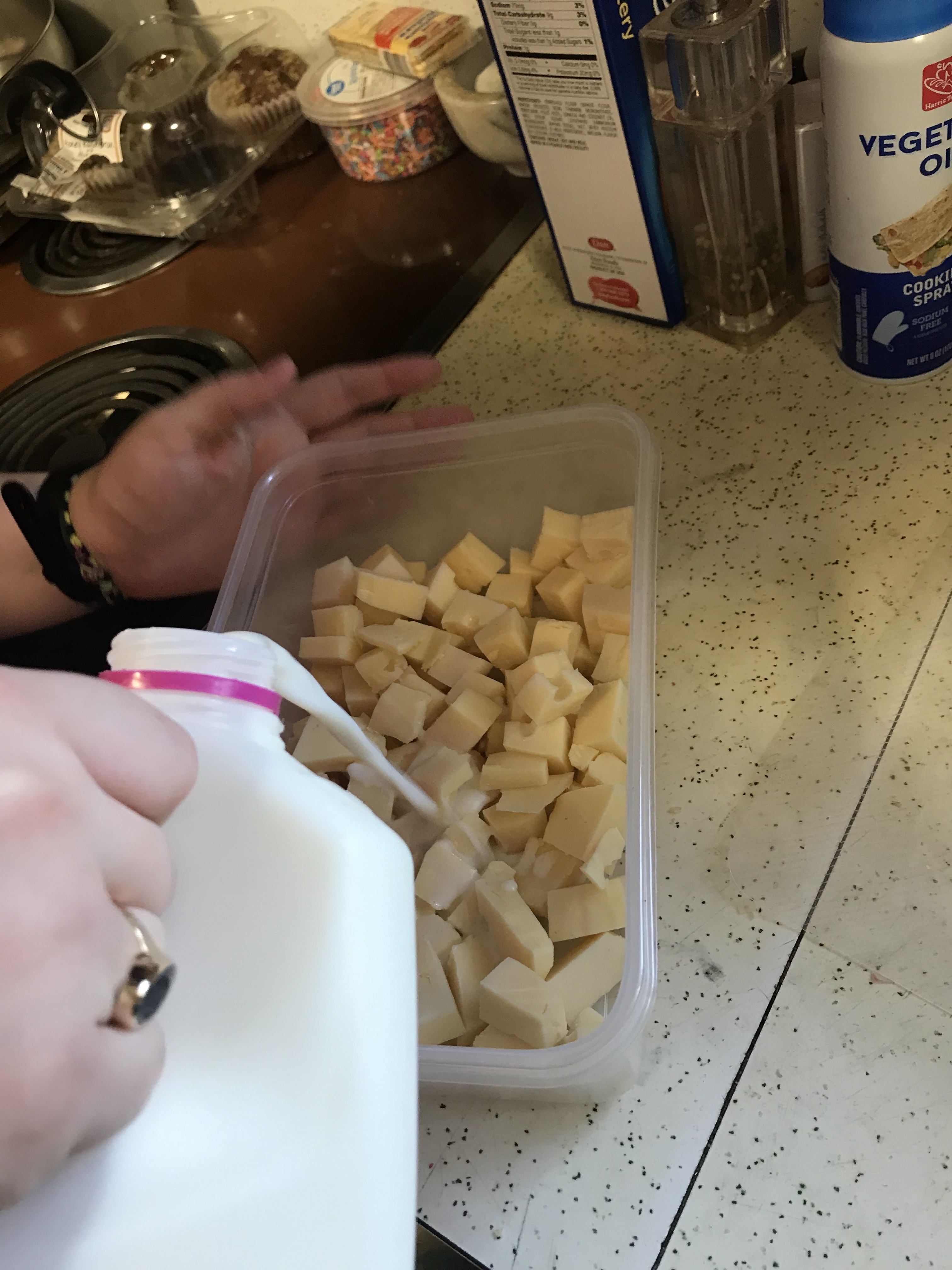
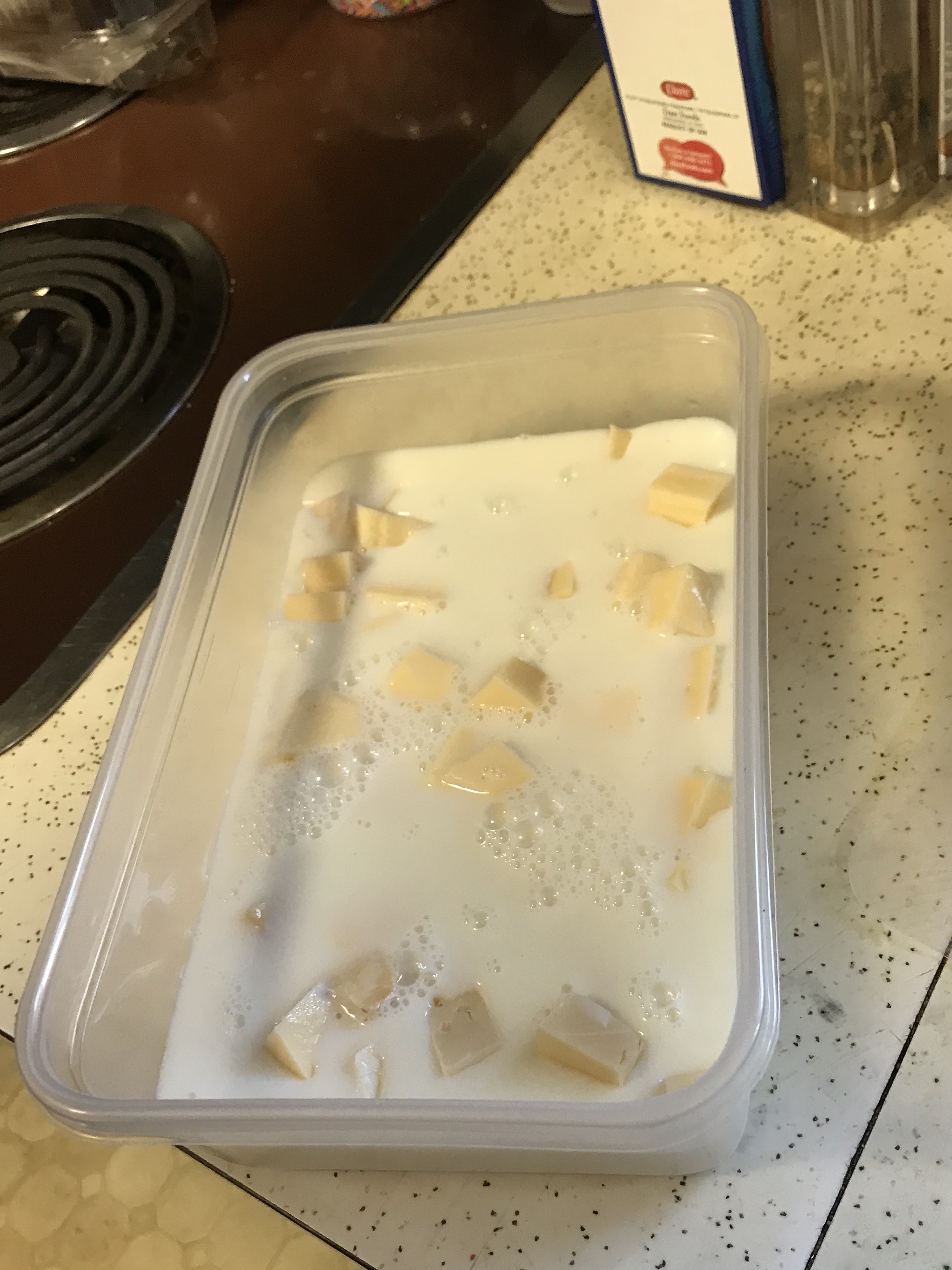
Then, I had to place the cubes of cheese in a container and pour milk over them until they were covered.
Once I covered all the cheese, I had to let the cheese soak in the milk for two hours!

While the cheese soaked in the milk, I melted the butter in a crock pot (the cookbook suggests a saucepan, though).

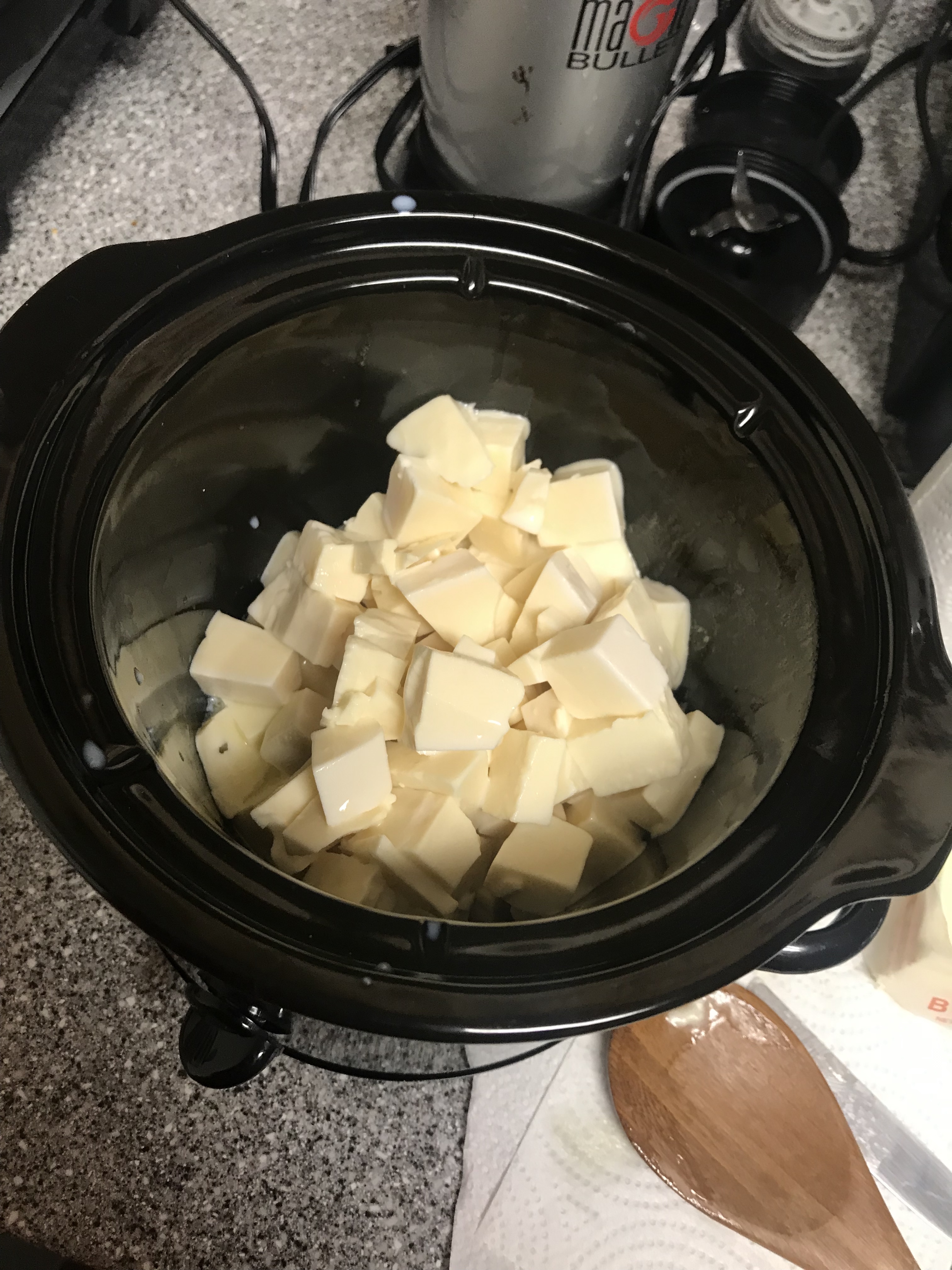
After the butter melted and the cheese soaked for 2 hours, I then put the cheese into the crock pot with only 2 tablespoons of the milk it was sitting in.
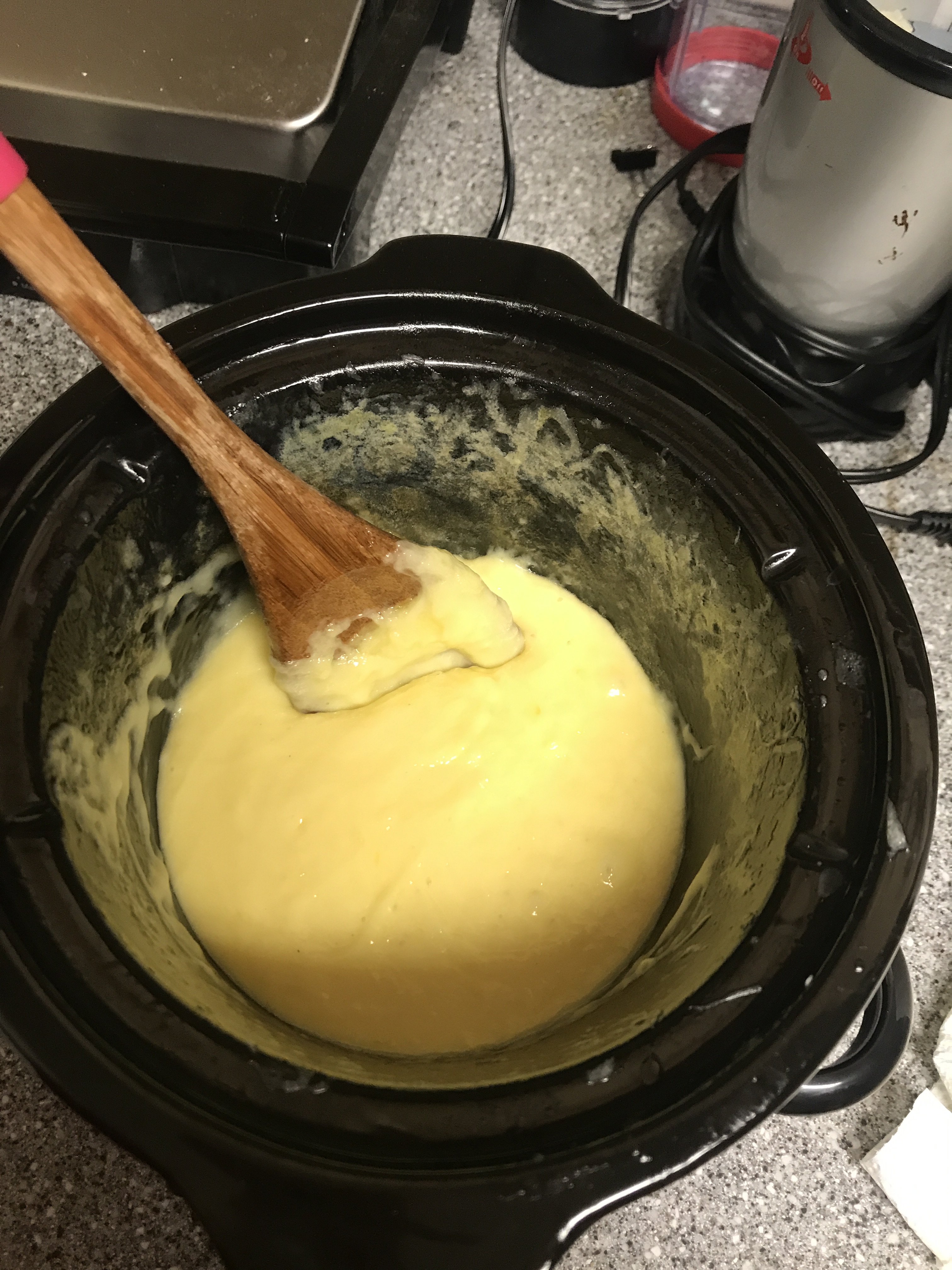
After a little while on high, it began to melt and was kinda stringy.
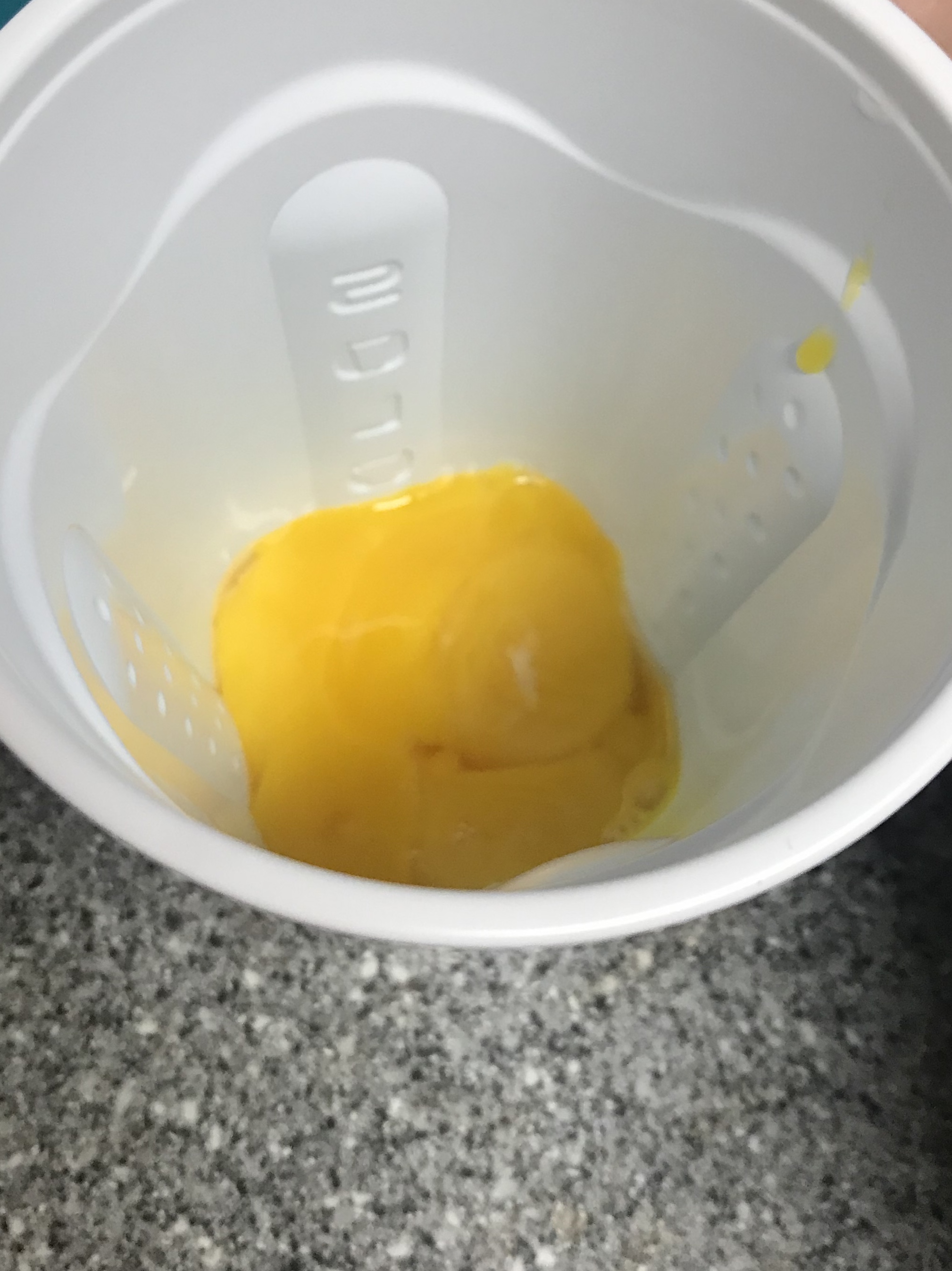
The next step was to crack the 4 eggs and separate the yolks from the whites!
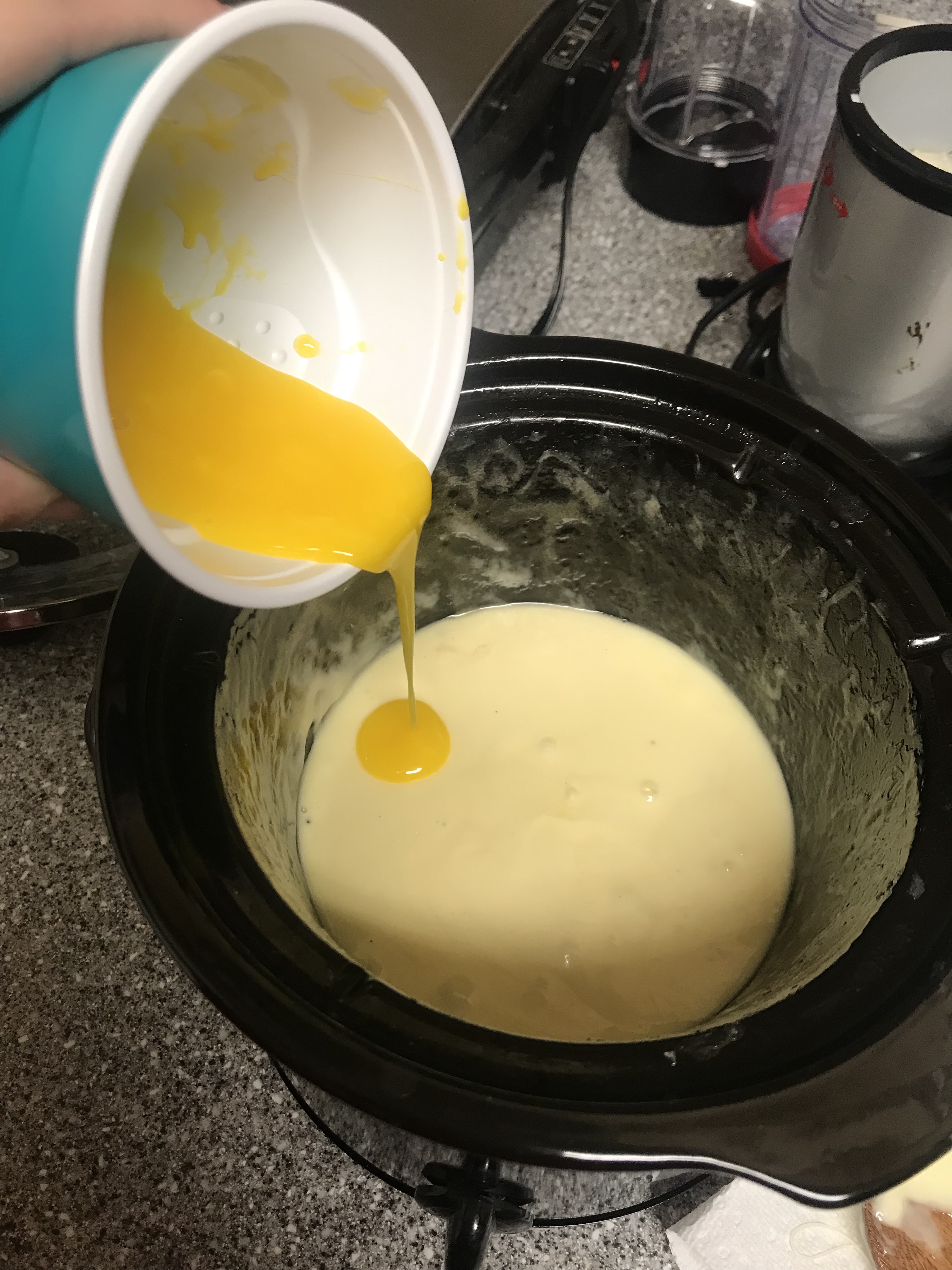
After doing so, I mixed the egg yolks together and added a little into the cheese mixture (on low heat) at a time.
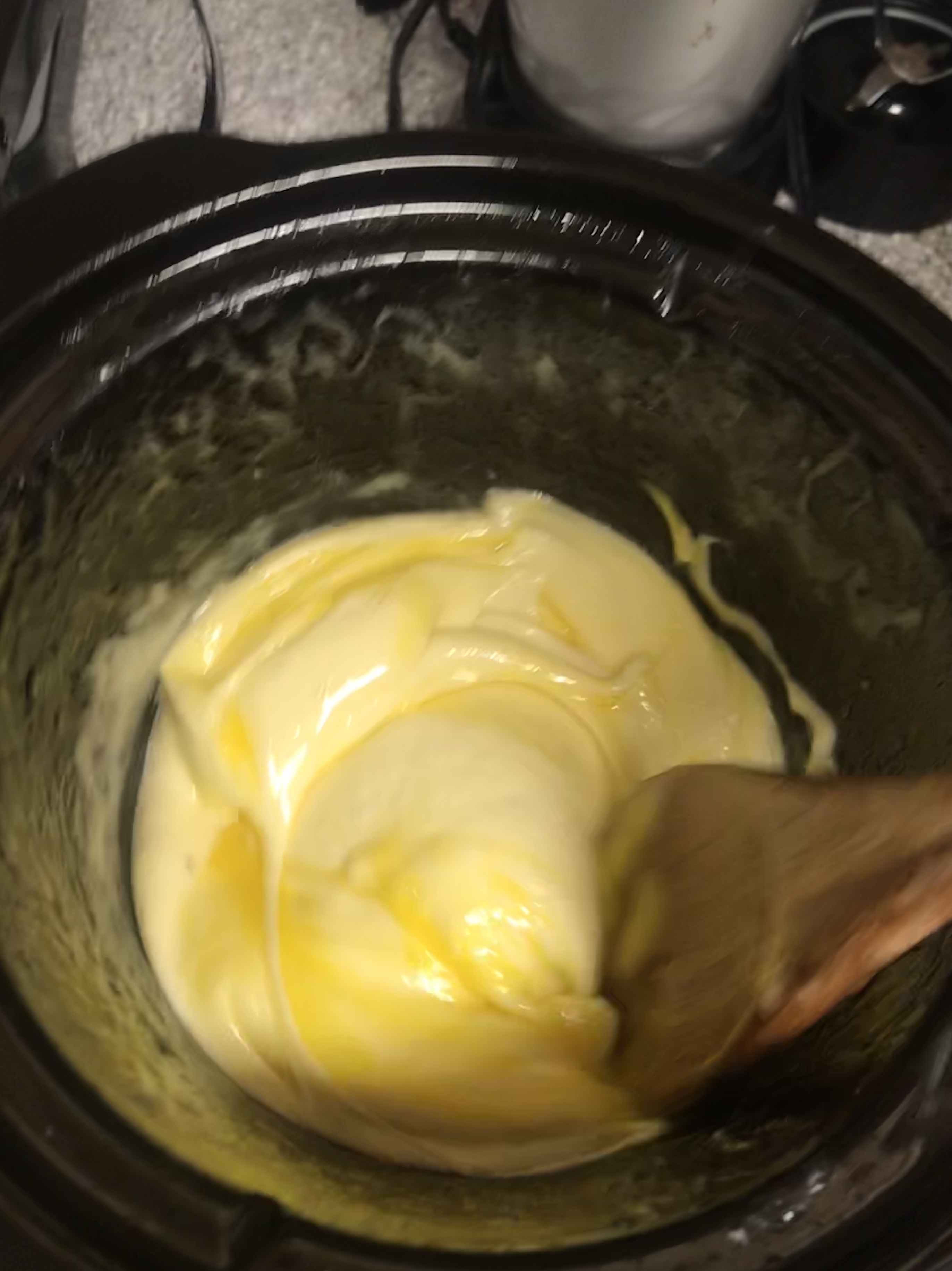
I continued to mix in the egg yolks a little at a time until they were fully incorporated.
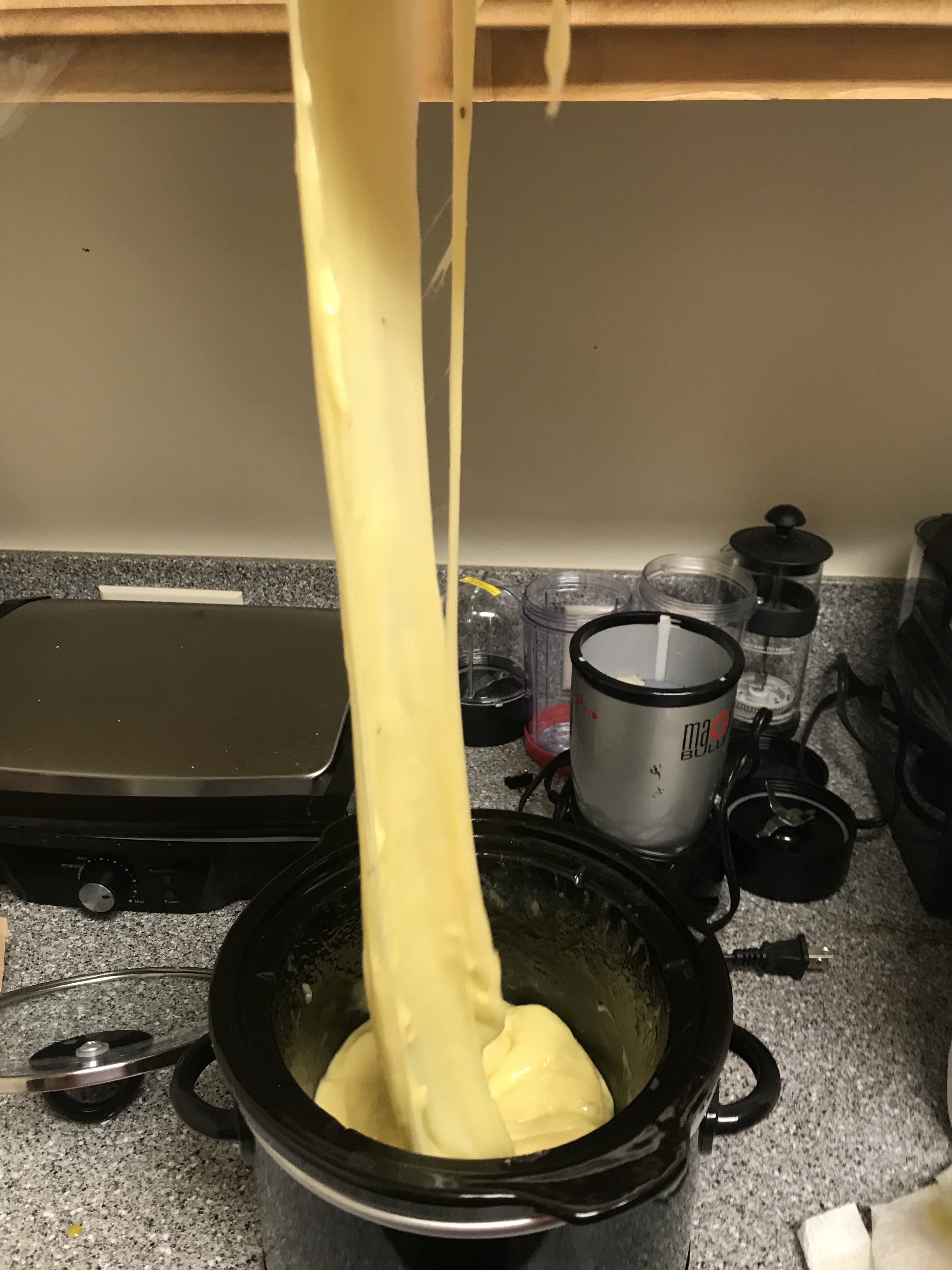
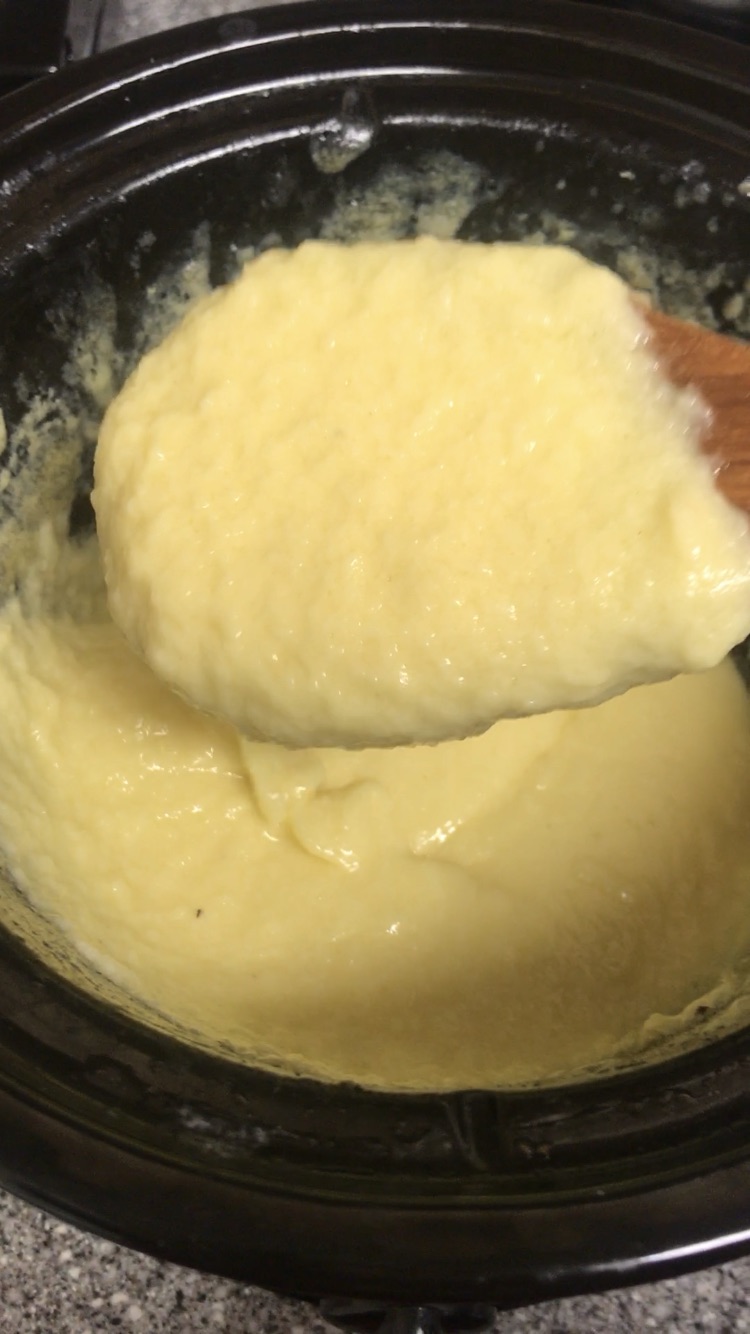
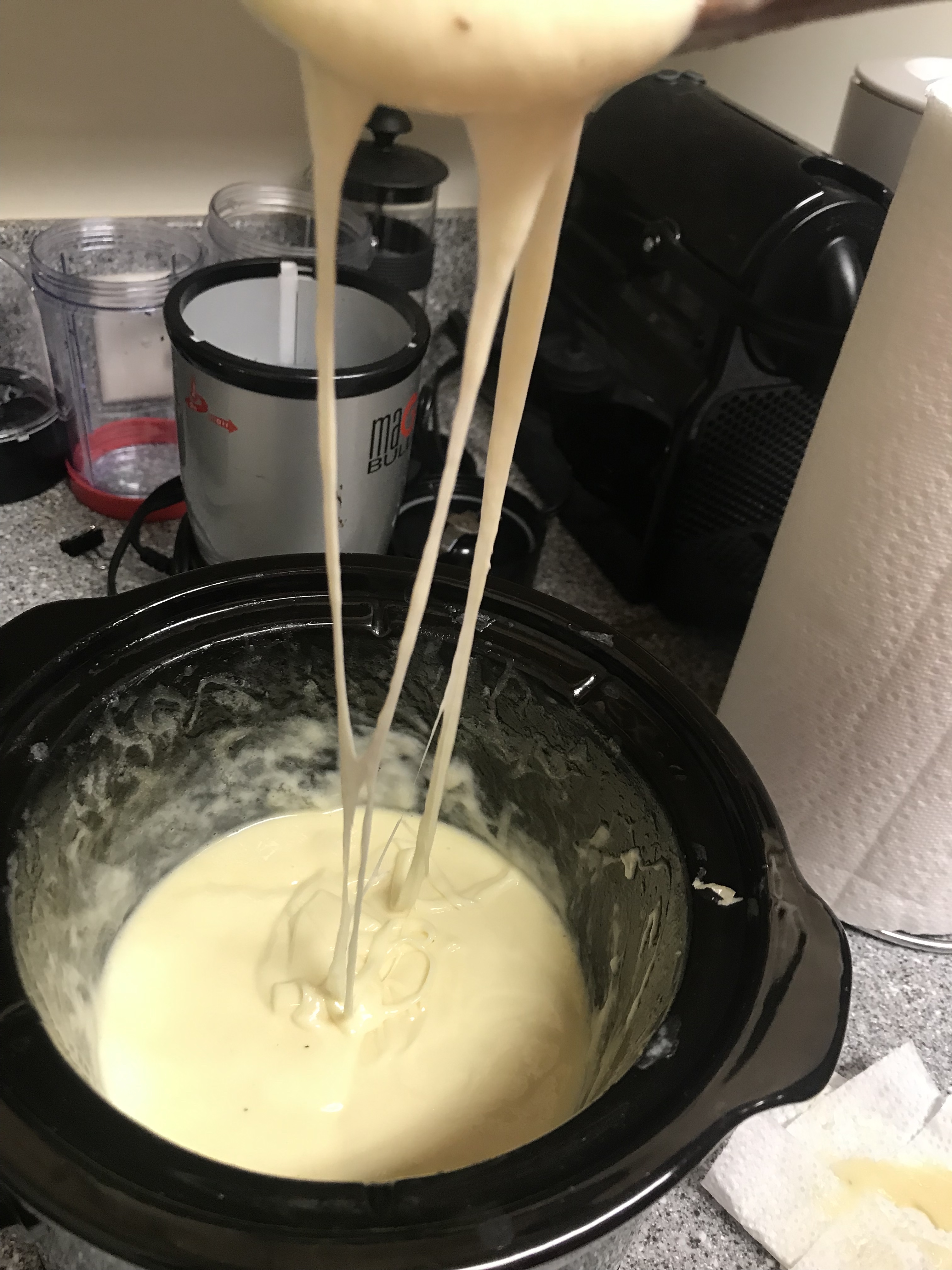
After the egg was incorporated I let it sit on low for about 30 more minutes. It then became even more stringy and had that nice “cheese pull” effect!
And Tah Dah! The fondue making experience was over!

Once it was finished, I decided I should taste it before taking it into my Italian Cuisine class the next day, and this is where the picky eater in me had some issues. Like any amateur cook, I didn’t research the ingredients I was using- I just saw the recipe, said “oooh fondue,” bought the ingredients listed and went for it! Only to learn after making it that fontina cheese when melted gives off an earthy- mushroom like taste, which I do not like at all! However, even though I did not enjoy it, I took it to class the next day and a lot of the people in the class expressed that they liked the taste and overall enjoyed this dish. So with that said, It shows that everyone’s taste buds are different, and just because I didn’t like this earthy tasting fondue doesn’t mean someone else will.

Little Last Minute Information on this recipe:

This isn’t the most ideal recipe to refrigerate and re-heat for the next day, because as seen in this picture- the texture changes drastically! However, this is how I served it and people said they liked it so I guess the re-heating affects the texture (due to the fats separating) more so than the taste!

Montessori Meets Cuisine and Culture

As addressed in my bio, I am a child development major taking on a semester of Italian cuisine and culture and I’m very interested in seeing where this adventure takes us. Being a child development major, you learn a lot about not only how children develop and grow, but also different education models that are used to teach and help children develop and grow. One of those models is known as the Montessori model. So, for this week’s entry I thought it would be interesting to dive into this model and the way they approach food and the culture within this classroom set up.

Before we dive into the food and culture of a Montessori classroom, I want to provide y’all with some background on who created this model and how it’s related to Italian culture. The picture below is of Maria Montessori. She was born in 1870 and was the first woman in Italy to become a physician and was a pioneer in early childhood education. She created the Montessori Model in 1907, and her 1st school with this model was called Casa dei Bambini, meaning Children’s House, located in a housing project in the slums of Rome and served children ages 4 to 7. She is the reason that we have this wonderful model that can be used with all children regardless of ability or age.

Maria Montessori

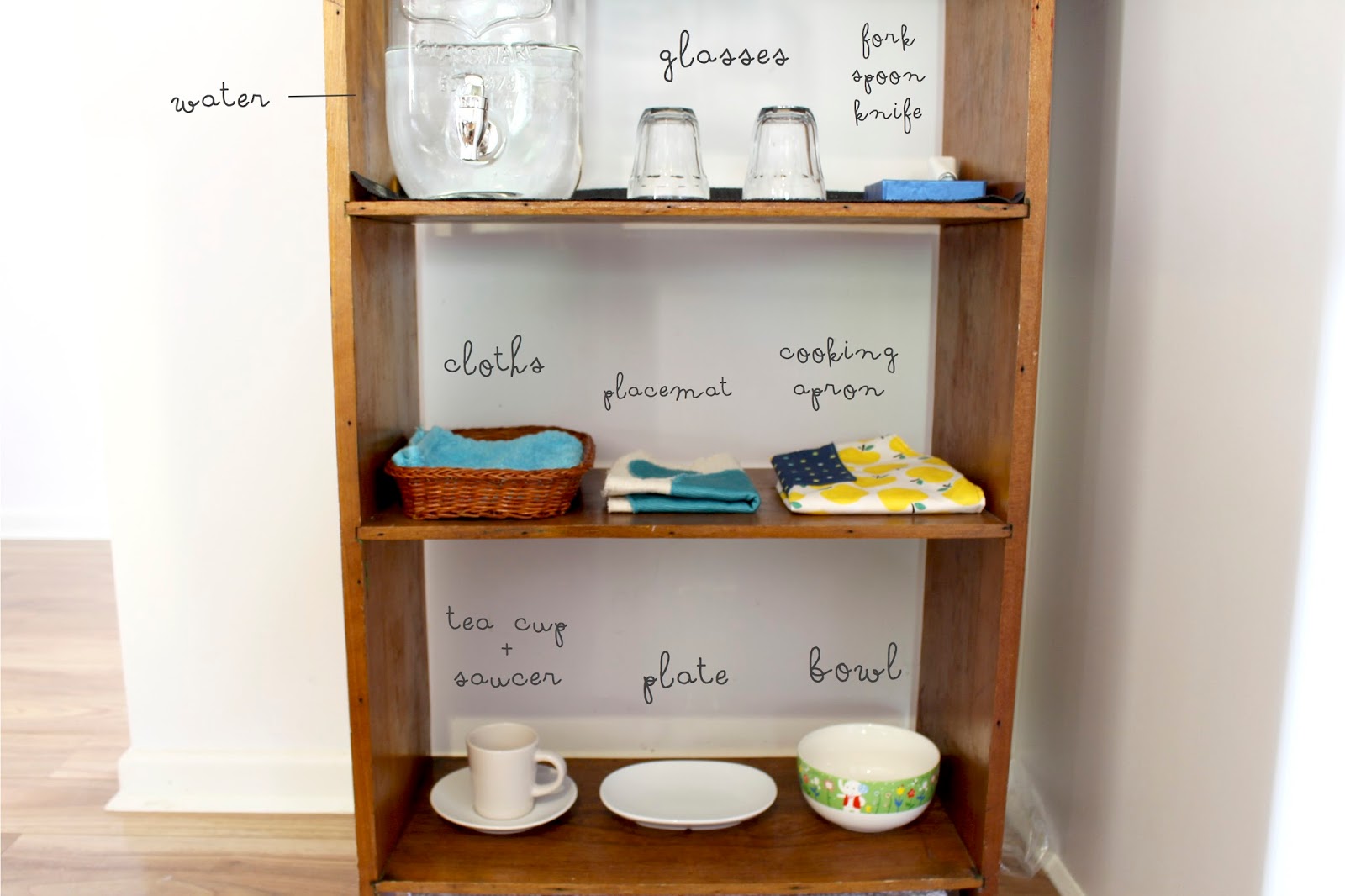
Her model focuses on children learning at their own pace and for them to learn responsibility and foster strong, positive feelings about oneself and others. The Montessori model places a strong focus on using real materials with the children in the classroom (i.e. real glass cups, and china plates), as well as including nature into the classroom by using lots of wooden toys and natural materials.


“The plates are always of china, and the tumblers and water bottles of glass. 
Knives are always included in the table equipment.”

—Maria Montessori, Dr. Montessori’s Own Handbook

The idea of them using real materials, such as the glass cups and china plates, is what really inspired me to look more into what food preparation and snack time could look like in a Montessori program. In many cases parents and adults in general would shy away from giving their 5 year old a knife to cut up food, but in a Montessori program the children are introduced to these materials through what they refer to as the “practical life” section of the classroom, and through snack time. The children in these programs build on these skills each and every day at their own pace. In these classrooms you may see things such as food prep activities with knives and other utensils, juicing, stirring and mixing, cutting and slicing, baking, and simply setting the table and serving the food.

Like with most things, there’s a “process” to what may seem like chaos from an outsider looking in. These children are taught these different skills throughout the program. Starting as early as in the infant-toddler classrooms (ages 0-3 years). These young children are learning to set the tables, clean up after themselves, and do some basic cooking skills.

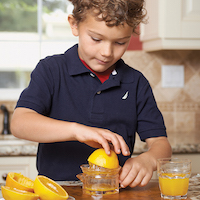
In this picture you see a young child from the infant-toddler room of a Montessori program making lemonade with a wedge of lemon and a lemon squeezer. They squeeze the lemon into a very small glass; add a small pitcher full of water and a tiny spoonful of sugar. Then they stir, and drink with great pleasure.

The last classroom I looked at is known as “Casa dei Bambini” which in this case means children ages 3 to 6 years. Cooking and food prep for this age group may look like slicing apples, squeezing an orange, grating cheese, or so many other things that help them work on coordination and concentration.

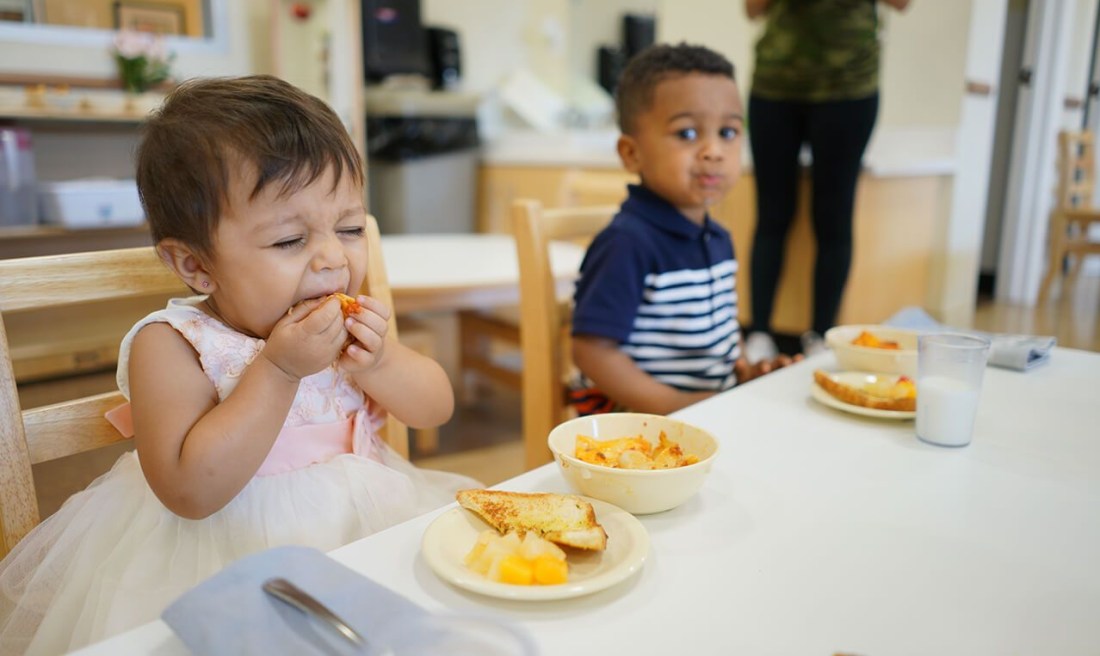
In a Montessori classroom there is no scheduled “snack time.” Instead, children in many Montessori classrooms help themselves to snack when they are hungry. Usually snack includes a fruit or vegetable, a protein such as cheese, nuts, or hummus, and maybe a carbohydrate such as crackers, tortillas, or bread. Children serve themselves buffet-style and then sit at a designated snack table to enjoy the food. In some schools, older children get the snack ready. These sous chefs slice fruits and vegetables, dish up yogurt, and plate crackers. Special snacks might also be prepared as a group lesson for a celebration or to sample traditional foods of another country.


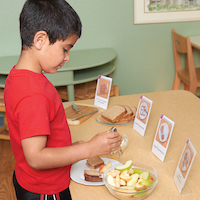
Children can prepare their own snacks from start to finish using the skills they have developed from this model, as well as, using “snack cards” which are 4-step photo instructions that are clear and easy that even the youngest children can follow them.

Though, this was just a quick over view of this model and the food side of things, it was able to show a unique take on how a Montessori program goes about snack time. Preparing and serving snacks (and even meals) is a natural way for children to learn cooperation and experience community, which are two important things for children to learn and experience to help them develop and grow. When children begin to internalize the foundations of Practical Life, they seek ways to use their skills and assume broader responsibilities. Preliminary activities that isolate single skills demonstrate children’s amazing ability to handle kitchen tools. So, next time you’re cooking with little kids present, try and get them involved instead of searing away from the idea. I promise it will serve such a meaningful and educational experience for not only the child but you as well. Plus, you’ll be bound to make many fun memories doing so!

A Family Favorite

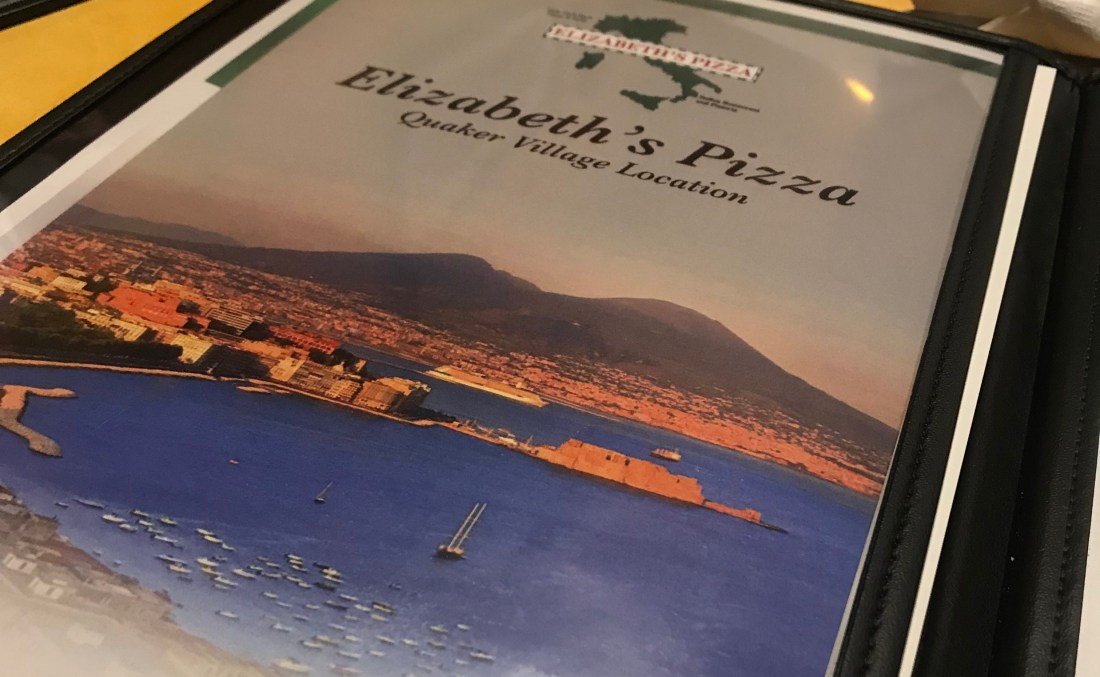
Since I go to college away from home, I try to go home as often as possible. When I am home for the weekend there are certain things my parents and I always end up doing. One of these things is that we always visit one of our favorite Italian restaurants, Elizabeth’s Pizza. There are multiple locations in Greensboro, where I am from, but the one my parents and I often go to is in Quaker Village. Elizabeth’s Pizza has been around since 1978 and it is an authentic Italian Restaurant that is family owned and operated. Their menu includes many traditional Italian cuisine and a few american dishes. The atmosphere is very causal and family-oriented, which is a huge reason my family loves going their so much.

The last time I went home to visit was the weekend of January 25th. By the time I got home it was time for dinner, so we decided to head over to Elizabeth’s Pizza. We were greeted by their friendly staff and given bread with olive oil and butter, like always. After looking over the menu for a little while, we all knew exactly what we wanted this time.

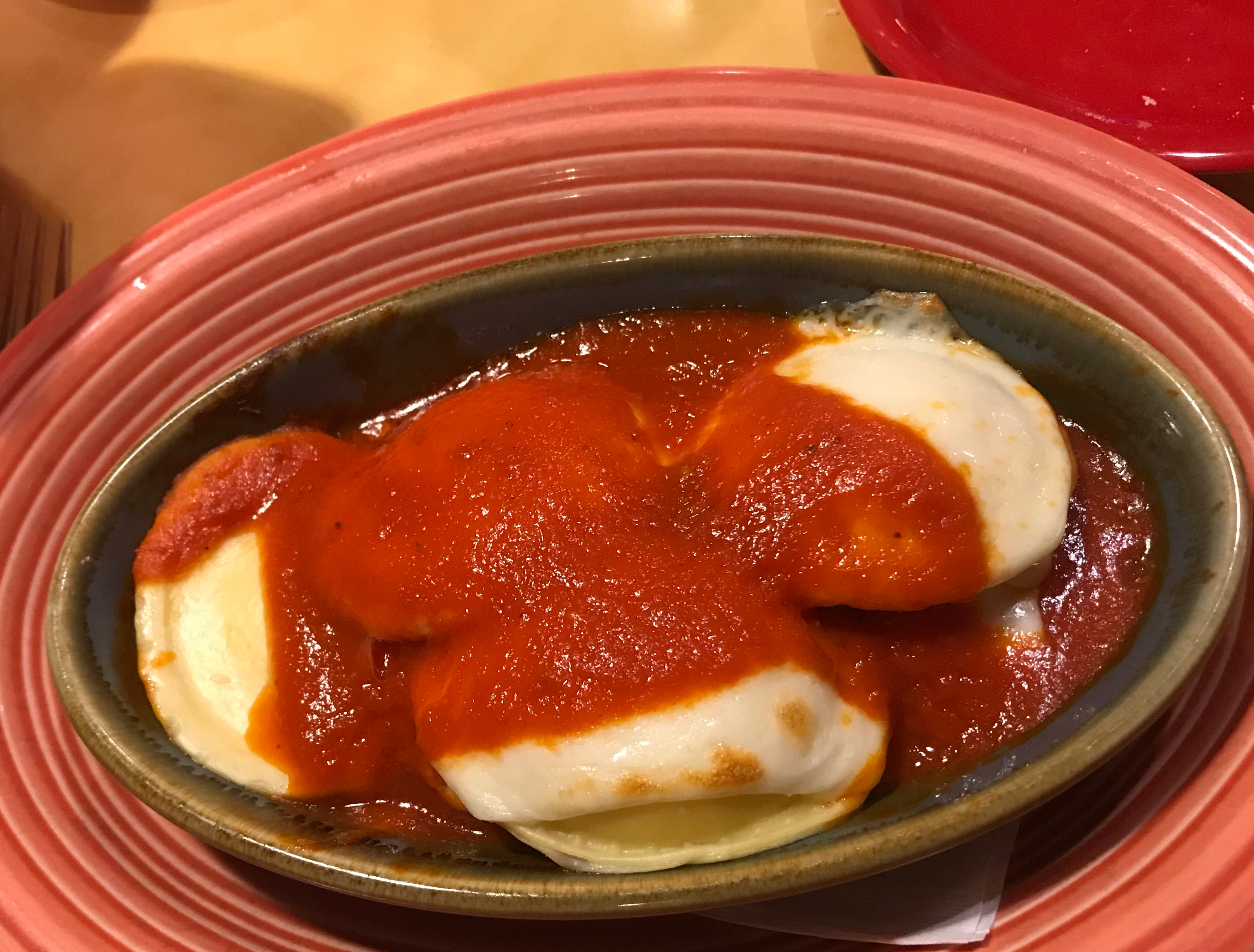
I choose to get one of my favorites, their cheese ravioli, which is served with marinara sauce and mozzarella cheese melted over the top of them. The mozzerella cheese on top was nice and warm and you had that nice “cheese pull” effect when you cut into one. The ravioli’s were well cooked and very delicious. When tasting the marinara sauce you could really tell that they used fresh ingredients. Overall, the display and taste of this dish was very yummy!

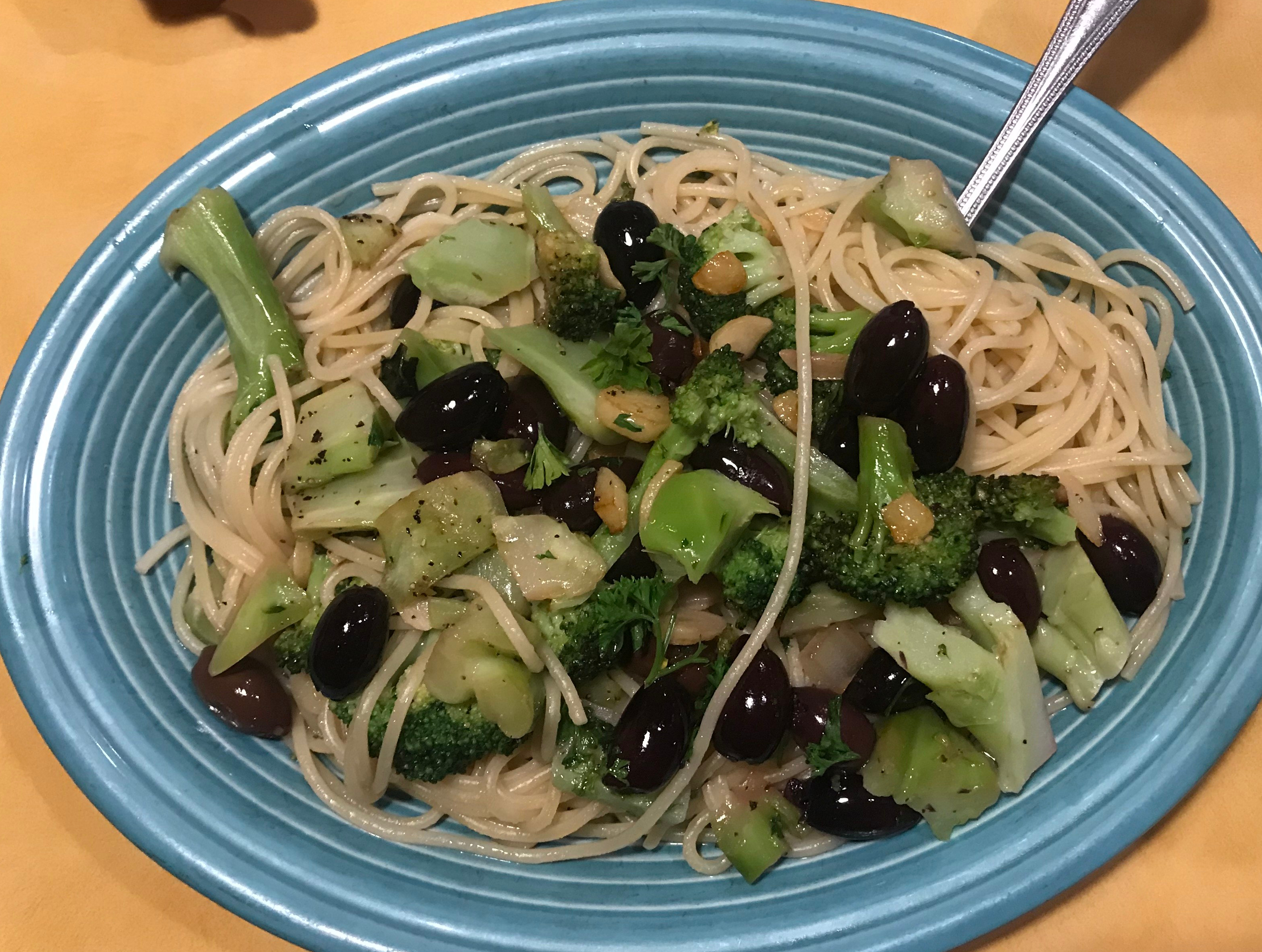
My dad is the adventurous one of the family, so he choose to get something he’d never had before and made it his own by adding to it. He got the Chicken Broccoli, which normally comes with fresh chopped chicken breast and broccoli sauteed with garlic and olive oil over pasta. He choose to make it his own by taking off the chicken and adding olives. Me, being the picky eater I am, would probably not enjoy this dish, but my dad absolutely LOVED it! He’s a huge fan of olive oil on his pasta so this was totally up his ally.

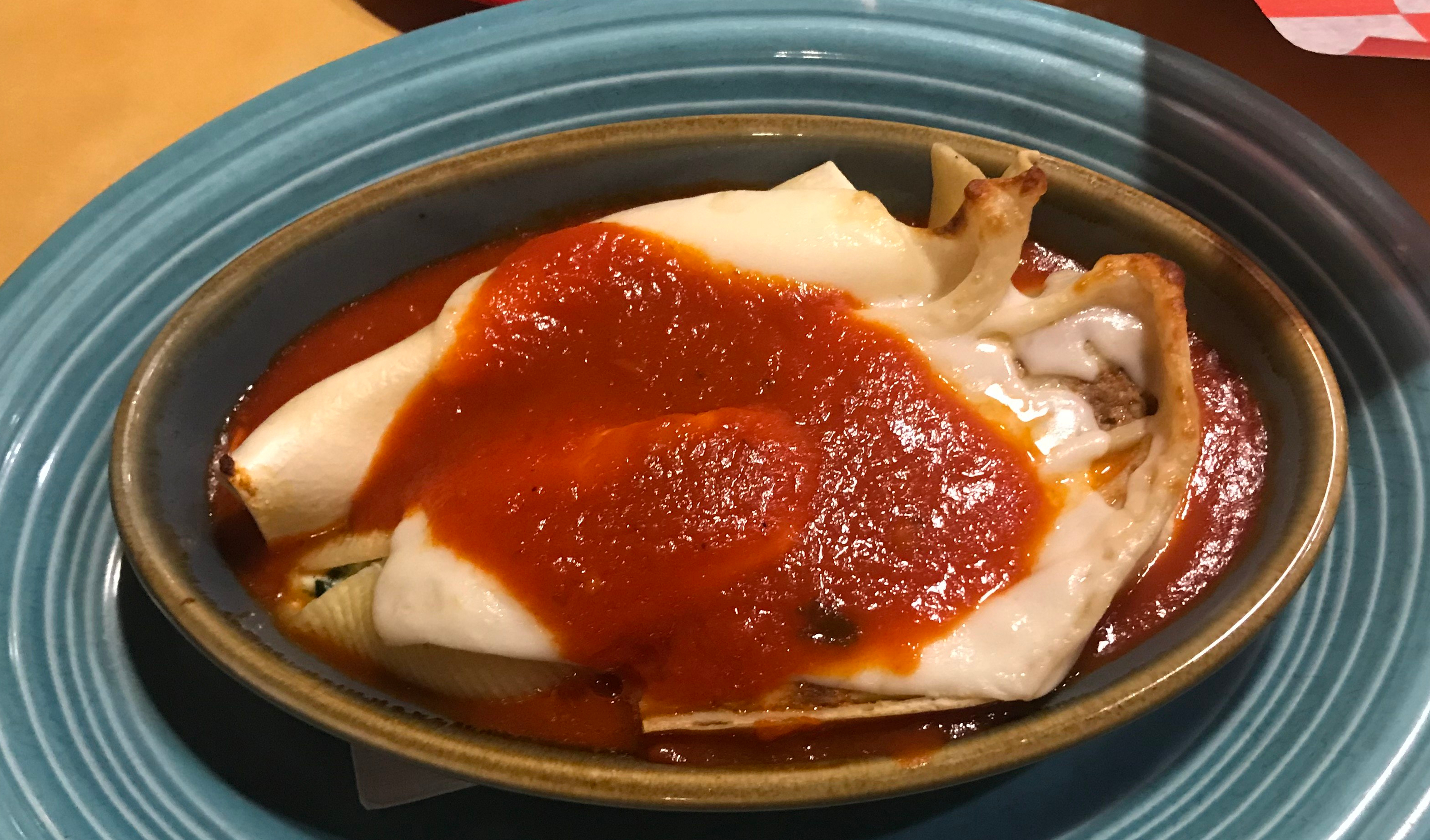
Lastly, My mom got a pasta trio. Her trio consisted of a small piece of lasagna, a stuffed shell, and manicotti. All three were served in the same dish with marinara sauce and melted mozzarella on top. She really enjoyed her food, and liked the idea of a trio since it allowed you to sample different things.

Overall, I would highly recommend checking out an Elizabeth’s Pizza if you’re ever in Greensboro and are looking for a casual dining restaurant with lots of traditional Italian cuisine options!

A Trip To An “Old- World Italian” Restaurant

What’s better than starting off the new semester than a dinner date with an old friend? On January 16th, One of my good friends from high school and I decided to catch up after not seeing each other for almost two years. When trying to decide where to grab a bite to eat we were faced with many choices. Did we want Italian, Mexican, Wings, or what? The decision was very hard to make, but ultimately we decided to try out an Italian restaurant that neither of us had been to before. Vic’s Italian Restaurant and Pizzeria “sets the standard for authentic, old-world, Italian cuisine & New York style pizza.” There are two locations here in Raleigh, NC- one downtown which has been around since 1998, and the one that I visited which is located off Lake Boone Trail and has been in business since 2016. The owner, Mario Longo, has been serving up his Italian family recipes for almost 30 years.

We went not knowing how formal or casual to dress, so we both decided to go “semi-dressy” by wearing jeans and a nice shirt. When we arrived, we were pleasantly surprised by the atmosphere of the place. We felt as though we made the right choice in our attire, and I believe that you would be fine going in something slightly more dressy if you wanted or even in a t-shirt if you just wanted to grab a quick bite to eat for lunch with some friends or co-workers. Once we were seated, we received service almost right away, and were even offered some garlic bread as we looked over the menu. After looking over the menu for a while we had made our decisions. I choose to go simple and try their cheese pizza, while my friend choose to get the chicken parmesan- which she said ended up being “very yummy!”

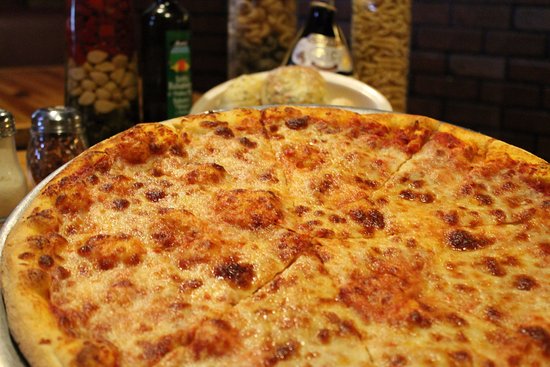
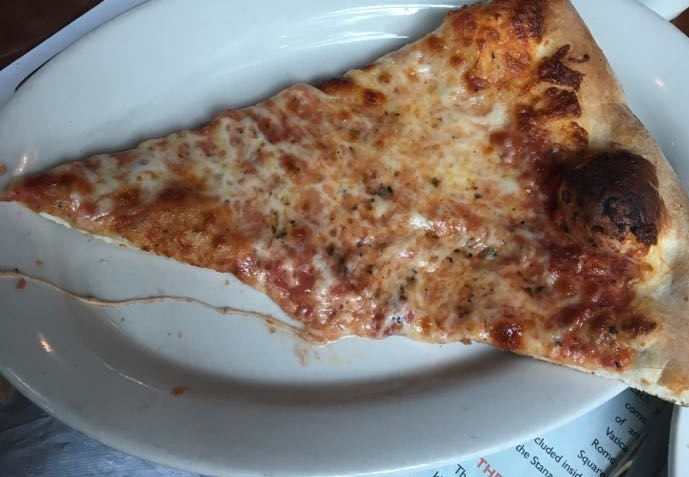
The cheese pizza was a pretty good size for being the “small.” It was their 14 inch, and they did have a bigger size (18”) if you were wanting to serve multiple people, even though their “small” could probably serve about 2 people itself. The pizza was very tasty. It was thin but with very dense crust. It had a nice balance of sauce to cheese ratio, not one over powered the other. One note to make though is that I did have some left overs, and when I went to heat them up the next day- it was not the best re-heated, but that could just be a personal picky eater thing of mine. The experience in all felt very personable, including the manager coming around to check on your meal and ask how you’re doing. It was a little expensive, especially for the college students budget (i.e. $12.95 + tax for the “small” pizza), but I would say that it was very worth it. Overall I would recommend Vic’s Italian Restaurant and Pizzeria to anyone looking for a place they could dress up for a night out, or just somewhere to grab a bite for lunch with some old friends. I’ll definitely be going back again soon!