
I’m someone who could eat pizza all the time. I am a picky eater so I often opt for just cheese, but this is one dish I will adventure outside my comfort zone with sometimes. With this said, my love for pizza and a recent trip to a NY Style pizza place, left me asking the question “what’s the difference between American pizza and Italian pizza?” Two of my favorite pizza places of all time are both NY Style- Mario’s Pizza in Greensboro, NC and Gino’s Real New York Pizza in North Myrtle Beach, South Carolina. So, I was curious so learn about the difference between my favorites and the authentic Italian version, since American pizza is derived from Italian pizza. What I found out through research was quite interesting.
I first decided to look at the difference in how they looked, before looking at some of the history and facts about each type.
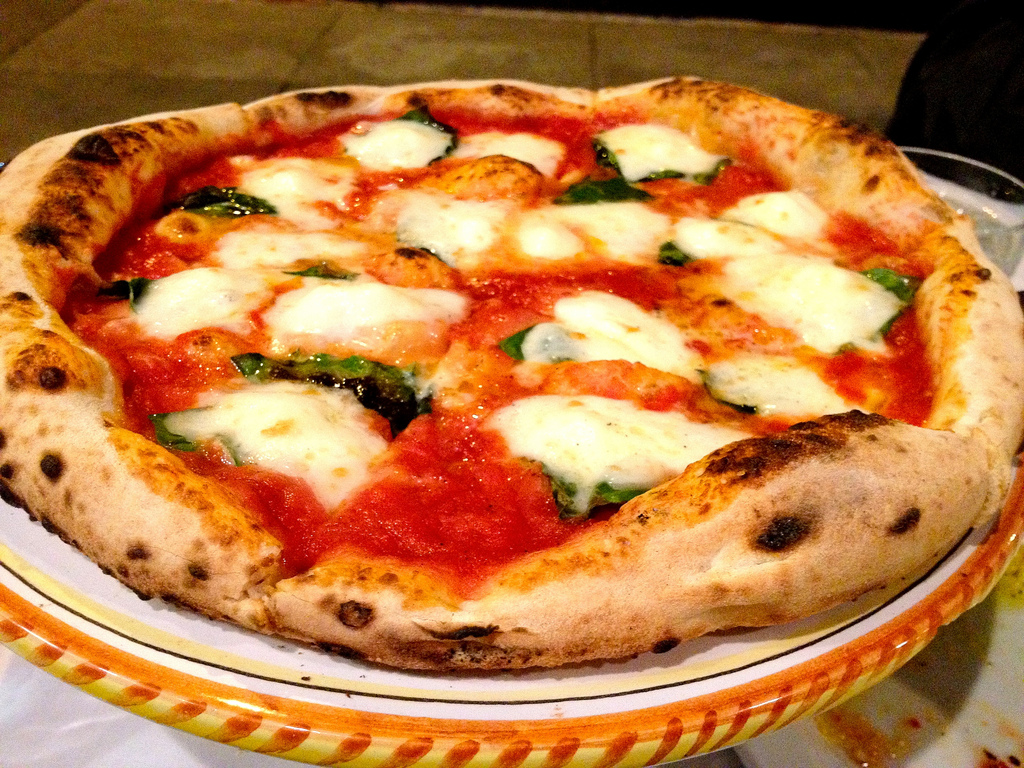
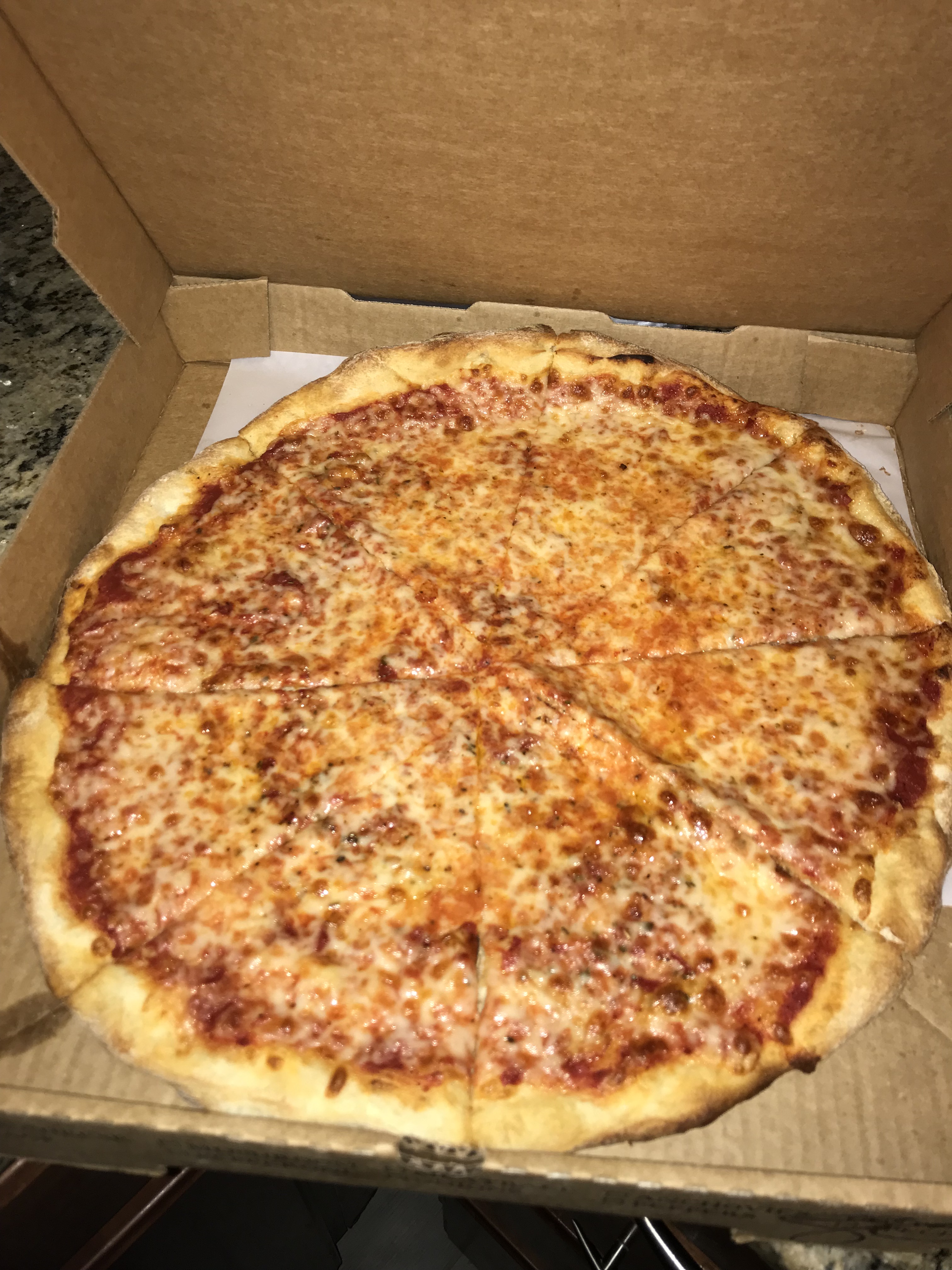
As we can tell from the two photo’s above, There are some obvious visual differences between the two types of pizza. The authentic version has a more prominent crust, and what appears to be a more simple arrangement of ingredients on top (very similar to the pizza I had in my first blog post when I visited Vic’s). In the second picture, which is a NY Style pizza, there is clearly a “thinner” crust than the authentic version. There is also cheese spread out across the whole pizza more than the other, and there is visibly more grease on the NY Style.
Other than the visual differences, I looked up what some of the history and key differences between the two types of pizza. What I learned was that the first pizza to pop up was what we now know as Pizza Margherita, which is what’s pictured above for the authentic image. Pizza Margherita is a pizza topped with tomatoes, basil and mozzarella. This pizza was Queen Margherita of Savoie’s favorite which is how it got its name. During this time there was no such thing as “American pizza,” so how did it come about? Apparently, the first pizza sold commercially in the US was focaccia, a thick- crusted version of pizza that may also be referred to as what we know as “pan pizza.” These pizza’s were available in Italian bakeries, and the first pizzeria in the Little Italy section of New York City was opened by Gennaro Lombardi, originally from Naples, in 1895.
After this, pizza greatly increased in popularity in the US both as a cheap meal-in-one food during the great depression and with the return of the US serviceman from Italy at the end of the second world war. Standardized fast-food versions of pizza emerged, but with the growing interest in cuisines from other cultures that blossomed in the late twentieth century, pizza was affected as well. The US, defintley became more experimental with the toppings they placed on pizza.
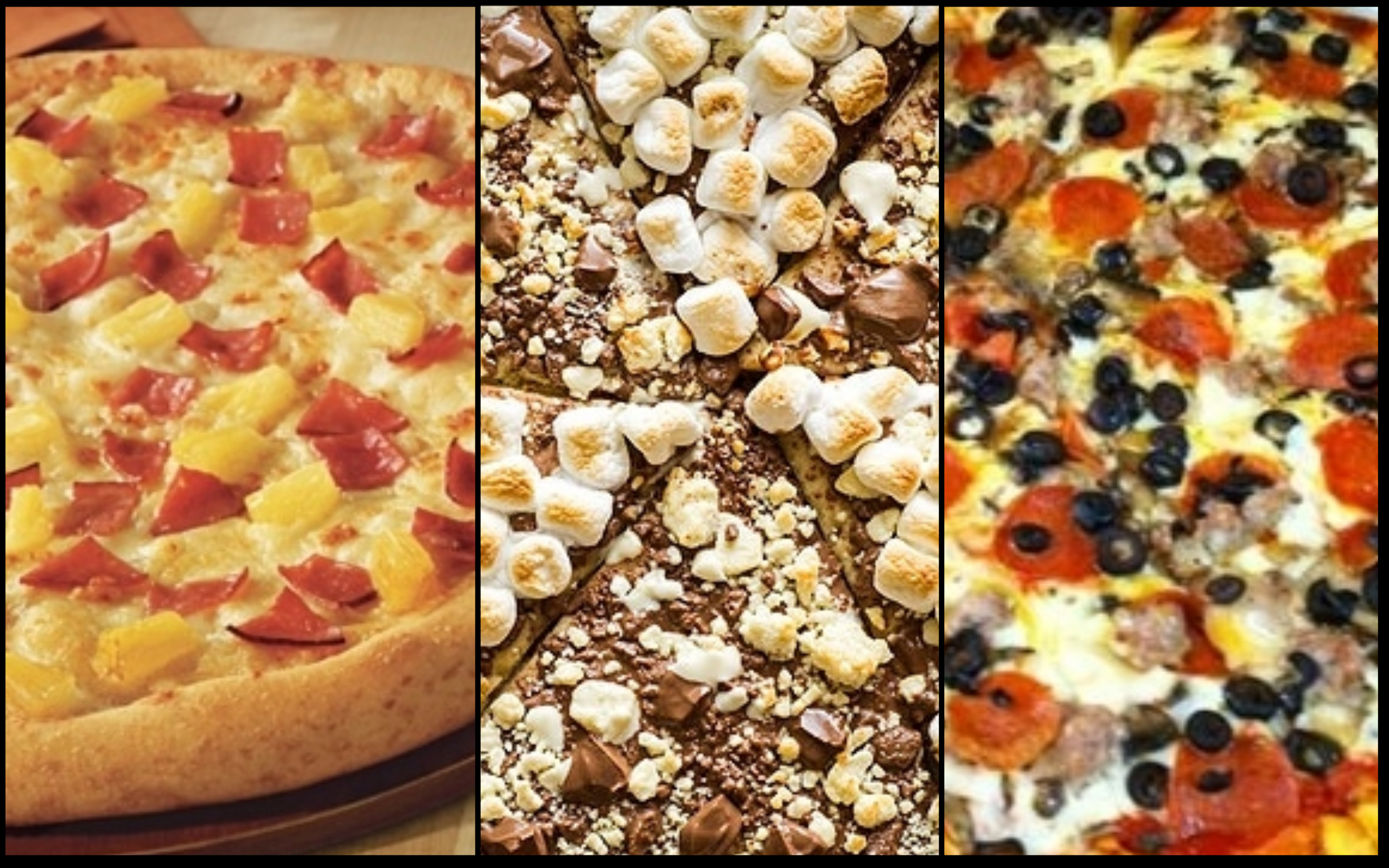
Such as the pizzas seen above. The US has been experimental by adding fruit such as pineapple on pizza, adding an abundant amount of toppings on a pizza at one time, and even creating dessert pizza’s that consist of chocolate and other sweets. They also got experimental with the styles of crust, as seen in the picture of the authentic pizza, their crust looks to be more dense and thick. Today, in the US, we have thick, thin, extra thin, deep dish, pan pizza, and so many more different types that change the overall texture of the pizza because some are softer and others may be crunchier.
In the end, I learned that the difference between Italian and American pizza and the similarities between them as well depend on the same, most important ingredient- the person making the pizza. Everyone has a different idea and preference for what type they like better, I like NY style, you might prefer the Neapolitan style, and someone else might really like Chicago style. In the end it is all about preference. The US used some of the basics from the authentic version and made it their own by being experimental with the toppings and styles of crust, but if you go back to the basics of how a pizza is made they all incorporate the same things. They all have a crust, the authentication and amount of each ingredient might differ from one to the next, but they are still ending up with a dough. Some might use fresher and less toppings than the other, but they are still pizza. Like with anything, we all have a preference on how to do things, but usually we all start off with the same general goal, and accomplish the same outcome- what we do in between may differ but that’s okay because that helps add a special uniqueness to whatever we are trying to accomplish, in this case pizza.
 Meghan's Italian Cuisine Experience